Neighborhoods
Provenza and Parque Lleras: Medellín’s Dining and Nightlife Core
What it is really like around Provenza and Parque Lleras, and why many guests stay a few streets away in calmer Manila.
In this guide
- The character of Provenza and Parque Lleras
- Who it suits, and who it does not
- Getting around and location
- Things to see and do
- Where to eat and drink
- Coffee, cafés and coworking
- Nightlife and evenings out
- Parks, green space and staying active
- Everyday life: groceries, services and daily needs
- Safety and practical notes
- Cost and value
- How to decide
The character of Provenza and Parque Lleras
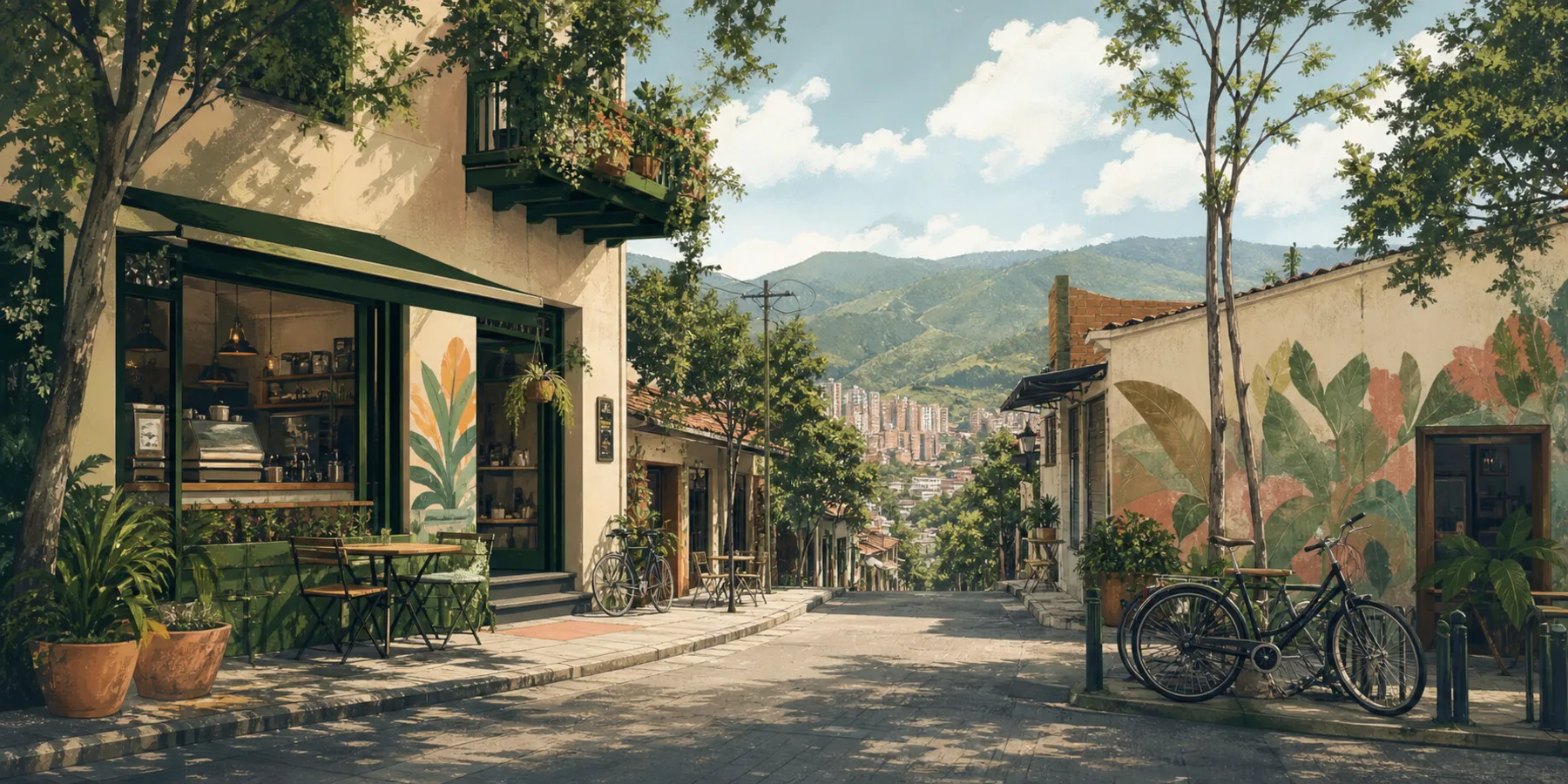
Provenza and Parque Lleras sit at the heart of El Poblado, and together they form the densest concentration of nightlife and destination dining anywhere in Medellín. Parque Lleras is the older, rowdier anchor, a small square that fills in the evenings and spills into the surrounding streets. Provenza, a short walk uphill and across, has become the polished sibling: leafier streets lined with boutiques, brunch spots and restaurants that would not look out of place in any major world city. This is where a large share of visitors, particularly first-timers and short-stay travellers, end up spending their evenings, and it shows in the energy, the crowds and the prices.
The honest trade-off here is intensity. This is a part of the city that runs late and loud, with music from several venues layering together after dark and streets that stay busy well into the early hours from Thursday onward. During the day it can feel almost calm, all speciality coffee and quiet boutiques, but the character flips completely at night. The streets are also genuinely steep in places, and you will feel the hills on foot. If you want to be at the centre of everything, you are in exactly the right spot. If you want to sleep early and work clear-headed, you will be fighting the neighbourhood rather than living with it. Barrio Manila, where StrataSix is based, sits downhill and noticeably calmer while still keeping you within reach of all of this.
Who it suits, and who it does not
This area suits people whose trip is built around going out. If you are here for a week or two, want restaurants and bars within a few minutes' walk, and expect to be out most nights, Provenza and Parque Lleras deliver that with almost no effort. It also suits people who value variety and are happy to pay for it: you can eat a different cuisine every night, and there is always somewhere new. Social travellers, groups and anyone who wants to meet other visitors will find the density works in their favour, because everyone else has made the same calculation.
It suits far less well anyone trying to build a stable working and sleeping routine. Remote workers who need quiet nights, early starts and a predictable rhythm often find the noise, the weekend crowds and the premium prices wear thin after the first novelty passes. Light sleepers should be especially cautious about accommodation facing the busier streets. Families and people wanting a local, everyday feel will find this the least representative slice of the city. Here is the honest trade-off: the very things that make it a great nightlife base, the density and the late energy, are the things that make it a hard place to live and work over a longer stretch. Many people who stay a month land on a compromise, basing themselves somewhere calmer nearby and treating this as the place they visit rather than the place they sleep.
Getting around and location
On foot, Provenza and Parque Lleras are compact and walkable, which is much of the appeal: most of the bars, restaurants and cafés are within a comfortable stroll of one another. The catch is the terrain. The streets climb, and after a long day or a late night the hills are real. Rideshare and taxi apps are widely used and usually the simplest way to arrive and leave, especially at night, and you should plan for higher demand and slower pickups during peak weekend hours. The nearest metro access is a walk downhill from the core, so while the wider El Poblado area is connected to the city's rail spine, you will not be stepping straight off a train into the middle of the nightlife.
For getting further afield, this is a convenient launch point. The large malls of El Tesoro and Santa Fe are a short ride away, and the rest of the city is reachable by a mix of metro, rideshare and taxi. One pleasant local rhythm worth knowing is the Sunday ciclovía, when a stretch of Avenida El Poblado is closed to cars and given over to walkers, runners and cyclists; it is a genuinely nice way to see the area at a slower pace. Treat travel times with some flexibility, because traffic in and around El Poblado can be heavy, and what looks close on a map can take longer than expected at busy hours.
Things to see and do
The honest truth about this area is that the main attraction is the area itself: wandering Provenza's boutique streets, browsing design shops and independent stores, and settling into the rhythm of long meals and slow coffees. Parque del Poblado, the neighbourhood's leafy central square, is a pleasant place to sit and watch the day go by, and it anchors the older part of El Poblado with its church and shade. For a proper sight with some history and greenery, Museo El Castillo in southern El Poblado is worth the trip: a castle-style museum with formal gardens that offers a complete change of pace from the bars and boutiques.
Beyond that, much of what you will do here is experiential rather than sightseeing in the traditional sense. The Sunday ciclovía is an easy, free way to spend a morning, and the malls of El Tesoro and Santa Fe double as attractions in their own right if you want cinema, shopping or an air-conditioned break. Treat any single recommendation as a starting point rather than a fixed list, and confirm opening hours directly, especially on Sundays and public holidays, when museums, shops and even some restaurants keep reduced or unusual hours. If your interest is museums, street art tours or the city's more famous transformation stories, most of those sit outside this neighbourhood and are best reached by metro or a ride.
Where to eat and drink
This is one of the strongest eating areas in the city, and probably the most varied. Around Provenza you will find clusters of contemporary Colombian restaurants, international kitchens spanning Italian, Asian and Middle Eastern, brunch-focused cafés, and a steady supply of newer, design-led places aimed squarely at visitors. The trade-off is price and turnover: this is the most expensive dining in Medellín, and specific places open and close frequently, so it is wiser to think in terms of clusters and food types than to chase a particular name that may already have changed hands. For everyday and more traditional Colombian food at gentler prices, you will generally do better a little away from the busiest blocks.
A few practical habits pay off here. From Thursday to Saturday, reservations are worth making for anything popular, because walk-in waits can be long. Many venues add a voluntary service charge of around ten percent to the bill; it is normal, it is optional, and you are within your rights to ask about it. Because the scene skews toward visitors, standards and prices vary widely from one block to the next, so it is worth reading recent reviews close to the time of your visit rather than relying on older recommendations. If you want a sense of local, everyday eating rather than the destination-dining version, wander a few streets out from the core and look for busier, plainer places full of residents.
Coffee, cafés and coworking
Coffee is a genuine strength here. El Poblado, and Provenza in particular, is dense with speciality cafés, many of them serious about single-origin Colombian beans and equally happy to have you sit and work for an hour or two. During weekday mornings these places are calm and productive; by weekend brunch they fill up and get loud, so if you are trying to get things done, aim early. As with restaurants, individual cafés come and go, so treat the scene as a cluster to explore rather than a fixed set of names, and confirm hours, because some keep shorter days on Sundays.
For dedicated work, the area has a reasonable spread of coworking spaces and café-workspaces, though the best of them get busy and can be noisy in the evenings when the neighbourhood shifts gear. This is where the practical case for a calmer base shows itself: cafés are excellent for a change of scene, but they are not a reliable substitute for a quiet place to work every day. StrataSix in nearby Barrio Manila is built around exactly that gap, with a proper desk and fibre internet in every residence, so you can keep the café mornings as a treat rather than depending on them for a stable connection and a seat. Whatever you choose, test the Wi-Fi before committing to a long working session, because quality varies a lot from one venue to the next.
Nightlife and evenings out
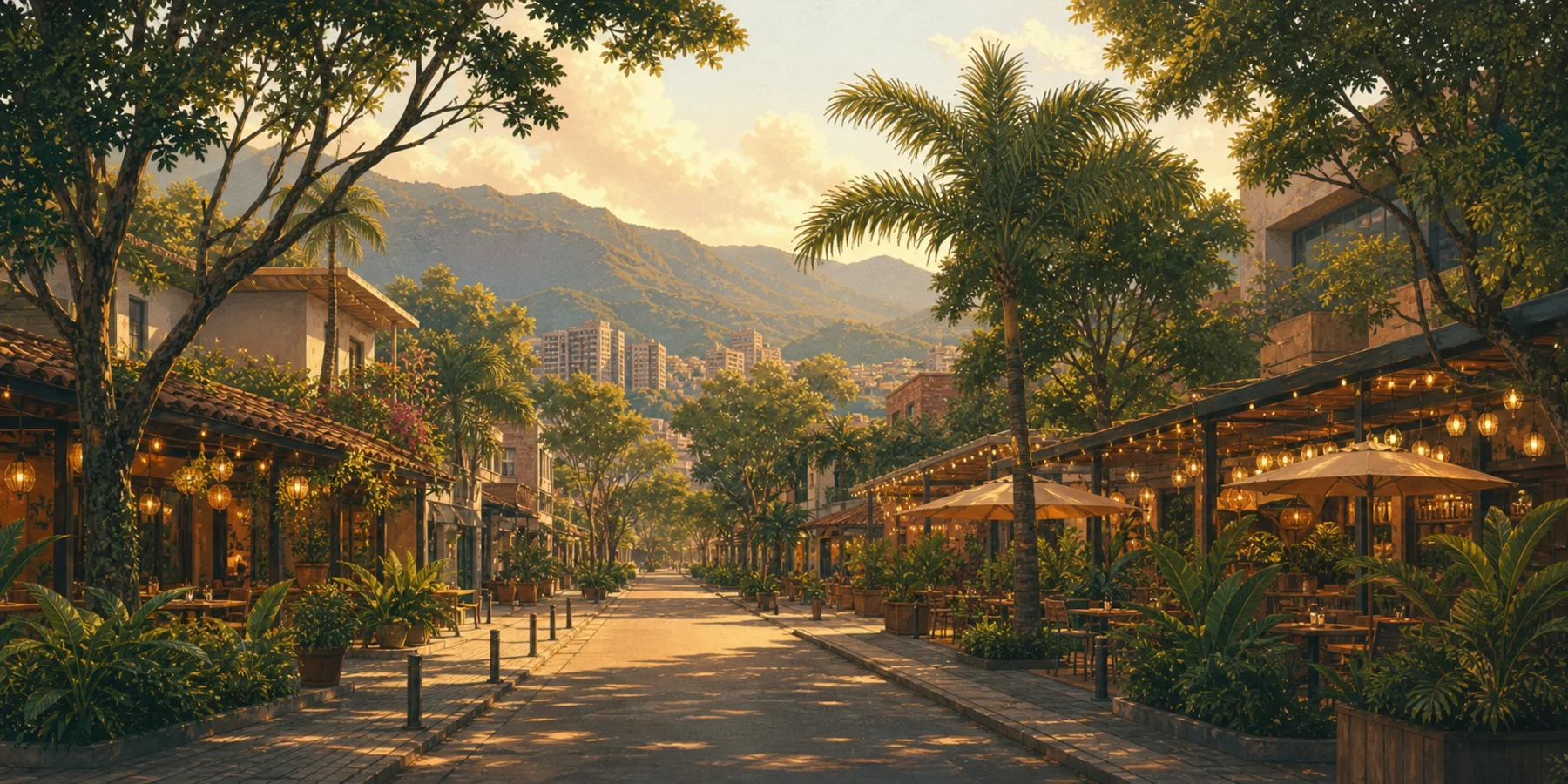
This is the reason many people come, and on its own terms it is excellent. Parque Lleras and the streets around it hold the densest concentration of bars, clubs and late-night venues in the city, ranging from rooftop cocktail spots to loud dance clubs, with Provenza offering a slightly more polished, restaurant-led version of the same energy. The scene runs from Thursday through the weekend, gets crowded, and stays open late. If you want choice, atmosphere and the ability to move between several venues on foot in a single night, few places anywhere match it.
The honest counterweight is that a busy nightlife district attracts opportunists, and sensible habits matter. Stay with people you know, keep your phone away and out of sight rather than on the table, and never accept drinks or invitations from strangers. Arrange trusted transport home in advance rather than improvising at the end of the night, and treat dating-app meetings with real caution, choosing busy public places and telling someone where you are. None of this is cause for fear; it is the same street sense you would use in any busy nightlife zone in a major city. Drink at a pace you can manage, keep an eye on your belongings, and the area rewards you. Do the opposite and it can go wrong quickly.
Parks, green space and staying active
Green space here is modest but real. Parque del Poblado gives you shade and a place to sit in the middle of the neighbourhood, and the tree-lined streets of Provenza make walking more pleasant than the density might suggest. For anything more substantial you will travel a little: Museo El Castillo's gardens in southern El Poblado are the nearest proper green retreat, and the wider valley has larger parks and hillside walks a ride away. The steep terrain, while hard on the legs, does mean that a walk uphill doubles as a workout, and plenty of residents use the hills exactly that way.
For staying active, the Sunday ciclovía is the standout, turning a stretch of Avenida El Poblado over to walkers, runners and cyclists and giving you a car-free way to move through the area. Gyms and boutique fitness studios are common throughout El Poblado, and many accommodations include access to one, so it is worth checking before you book if that matters to you. As always, confirm ciclovía timings and any gym hours directly, since they can shift around public holidays. If serious outdoor running or cycling is central to your routine, you will probably want to head out of the immediate nightlife core to find it.
Everyday life: groceries, services and daily needs
For day-to-day needs, El Poblado is well served. You will find full-size supermarkets, smaller convenience stores, pharmacies, banks and mobile-phone shops within easy reach of the Provenza and Lleras area, and the nearby malls cover almost anything else. English is more widely understood here than in most of the city, simply because so many visitors pass through, which makes practical errands easier if your Spanish is limited. The flip side is that everyday goods and services in this specific area often carry a visitor premium, and you can pay noticeably less for the same items a short distance away.
This is also where the practical case for a slightly calmer base tends to win out for longer stays. Living in the middle of the nightlife means groceries and quiet evenings compete with crowds and noise, whereas basing yourself downhill in somewhere like Barrio Manila keeps daily life straightforward while leaving the restaurants and bars a short walk or ride away. Whatever you choose, confirm hours for supermarkets, pharmacies and services directly, especially on Sundays and public holidays, when many operate reduced schedules or close entirely. Keep a little cash on hand for small vendors and tips, even though cards are widely accepted in the busier venues.
Safety and practical notes
Provenza and Parque Lleras are among the more heavily frequented and visible parts of the city, and by day they feel comfortable and busy. The practical concerns are the ordinary ones of any dense, visitor-heavy district: keep your phone and valuables out of sight on the street, stay aware in crowds, and be more careful late at night, particularly around the busiest nightlife blocks. Petty theft and opportunistic scams are the realistic risks rather than anything dramatic, and simple habits go a long way toward avoiding them.
A few specifics worth internalising, most of which come into play after dark. Use trusted transport apps rather than hailing unknown cars, and arrange your ride home before you are tired and less careful. Do not accept drinks or invitations from strangers, keep your card in sight when paying, and be cautious with dating-app meetings by choosing public places and letting someone know your plans. During the day, normal city awareness is enough. The single biggest determinant of a smooth stay here is how you handle the late-night hours, so if nightlife is your reason for coming, make good transport and good company the non-negotiable parts of your plan.
Cost and value
This is the most expensive area in Medellín, and there is no way around that. Accommodation in the heart of Provenza and Parque Lleras commands a premium, and dining, drinks and everyday services all sit at the top of the city's range. You are paying for location, walkability and being in the middle of the action, and if nightlife and destination dining are the point of your trip, that premium can be entirely worth it. The value equation is strongest for short, social, going-out-focused stays where the convenience genuinely earns its cost.
For longer stays and for anyone on a working budget, the value case weakens. The same money buys a calmer, more spacious base a short distance away, with quieter nights and lower everyday costs, while still keeping the nightlife within reach when you want it. Barrio Manila, downhill and calmer, is one such option, and it is a big part of why many longer-stay remote workers treat Provenza and Lleras as somewhere to visit rather than to live. Prices also shift with season and demand, so compare current rates close to your dates rather than relying on older figures, and factor in that the cheapest-looking option in this area is rarely the quietest.
How to decide
Start with the shape of your trip. If you are here for a week or two, your evenings are the priority, and you want restaurants and bars on your doorstep, Provenza and Parque Lleras are close to ideal, and the premium buys you real convenience. If you are a light sleeper or a remote worker who needs quiet nights and reliable focus, be honest with yourself about how the late noise and weekend crowds will feel by the second week, and lean toward a calmer base nearby. The area is superb for what it is; the mistake is asking it to be something it is not.
A sensible middle path suits many people: base yourself somewhere quieter and better value within easy reach, keep a proper desk and solid internet where you sleep and work, and come into Provenza and Lleras for the eating and the nights out. That way you get the best of the neighbourhood without living inside its noisiest hours. Whichever way you go, confirm the practical details close to your dates, opening hours, current prices and transport options, because this is a fast-moving part of the city where specific venues change often even as the overall character stays the same.
Frequently asked questions
Is Provenza a good place to stay if I need to work remotely?
It can work for short, social stays, but the late-night noise, weekend crowds and premium prices make it a hard base for a steady working routine. Many remote workers prefer a calmer, better-value spot nearby, such as Barrio Manila downhill, and treat Provenza and Parque Lleras as somewhere to visit in the evenings.
How safe is the Parque Lleras nightlife area?
By day it feels comfortable and busy. At night, use the same sense you would in any dense nightlife district: keep your phone away, stay with people you know, never accept drinks from strangers, arrange trusted transport home in advance, and be cautious with dating-app meetings. Petty theft and opportunistic scams are the realistic risks rather than anything dramatic.
Do I need reservations for restaurants here?
From Thursday to Saturday, yes, for anything popular, because walk-in waits can be long. Also note that many venues add a voluntary service charge of around ten percent, which is normal and optional. Specific places open and close often, so check recent reviews close to your visit.
How do I get around and reach the rest of the city?
The area is walkable but steep, and trusted transport apps are the easiest way to arrive and leave, especially at night. The metro is a walk downhill from the core, the malls El Tesoro and Santa Fe are a short ride away, and the Sunday ciclovía closes part of Avenida El Poblado to cars for walking and cycling.
Is it expensive compared with the rest of Medellín?
Yes, it is the most expensive area in the city for accommodation, dining and everyday services. The premium can be worth it for a short nightlife-focused trip, but for longer stays the same budget buys a calmer, more spacious base nearby with lower daily costs.
What is there to see beyond eating and nightlife?
The main draw is the area itself, from Provenza's boutiques to Parque del Poblado. For a proper sight, Museo El Castillo in southern El Poblado offers a castle museum with gardens. Most of the city's larger museums and famous sites are a metro ride or car ride away.