Neighborhoods
Ciudad del Río, Medellín: Modern, Central and Compact
A modern pocket around the MAMM and Mercado del Río with easy access north and south of the valley.
In this guide
- The character of Ciudad del Río
- Who it suits, and who it does not
- Getting around and location
- Things to see and do
- Where to eat and drink
- Coffee, cafés and coworking
- Nightlife and evenings out
- Parks, green space and staying active
- Everyday life: groceries, services and daily needs
- Safety and practical notes
- Cost and value
- How to decide
The character of Ciudad del Río
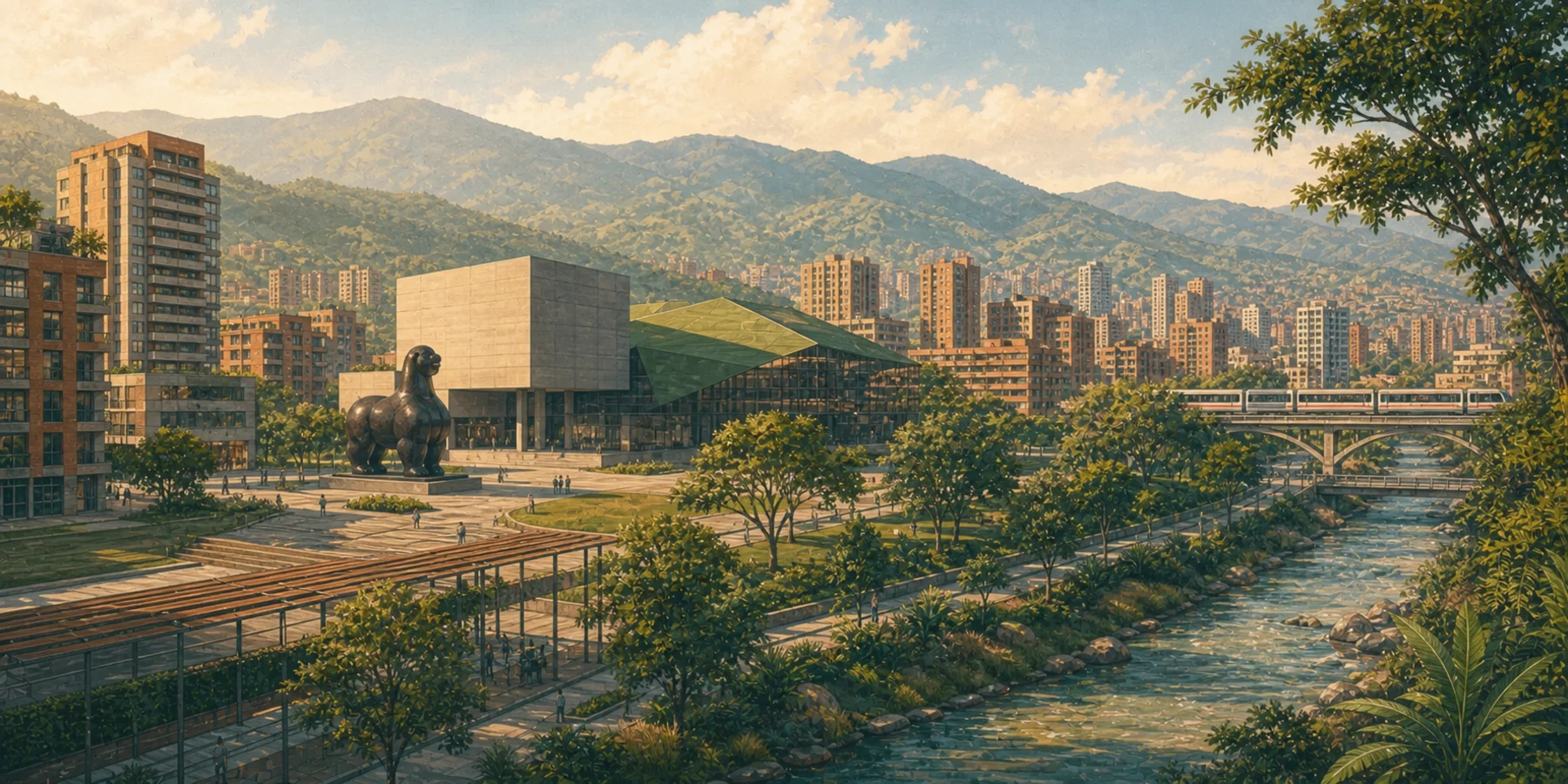
Ciudad del Río is one of Medellín's most deliberately modern corners, a compact district that grew up over the last couple of decades on former industrial land near the river. Where much of the city sprawls organically up the hillsides, this pocket feels planned and vertical: clusters of glass and concrete towers, wide public plazas, and a walkable core anchored by the Museo de Arte Moderno de Medellín, universally known as the MAMM. The mood is urban and contemporary rather than historic or leafy. You are surrounded by residential high-rises, offices, and the low hum of a neighbourhood that reads as a slice of a bigger, denser city rather than a traditional paisa barrio.
That modernity is the whole point, and also the honest limit. Ciudad del Río trades charm and greenery for convenience, order, and a central position on the map. The streets are relatively new, the sightlines are open, and the built environment feels cohesive in a way that older neighbourhoods do not. If you want cobblestones, mature trees, and a slow village feel, this is not that. If you want a clean, well connected, distinctly urban base within easy reach of the river corridor and quick metro links, it delivers exactly what it looks like from the first glance.
Who it suits, and who it does not
This district suits people who value location and connectivity above atmosphere. If you are here to work, move around the city efficiently, and enjoy a modern apartment with cafés and a food hall on your doorstep, Ciudad del Río makes a lot of sense. It appeals to remote workers, shorter-stay visitors who want a central pad, and anyone who prefers the predictability of a newer, more organised area. Design and art lovers will appreciate living beside the MAMM, and the general tidiness reassures first-time visitors to the city.
It suits less well anyone chasing quiet, residential neighbourhood life or a strong local community feel. The area can feel a little corporate and impersonal, with more towers than street-level texture, and it does not have the deep everyday-paisa rhythm of somewhere like Belén or the polished social buzz of central El Poblado. Families wanting parks and gardens, or long-stay residents who want to sink into a tight-knit barrio, may find it a touch sterile. Treat it as a central modern base first, and a neighbourhood second.
Getting around and location
Location is Ciudad del Río's strongest card. It sits near the Industriales metro station, which puts the whole north-south spine of the city within easy reach: south towards Envigado and Sabaneta, north towards El Centro and beyond, all without touching a car. That metro access, combined with a position right on the river corridor, means you are rarely far from wherever you need to be. Ride apps and taxis are plentiful too, and the road links along the river make crossing the city straightforward by any mode.
On foot, the immediate core is genuinely walkable, with plazas and short blocks that reward wandering. The Parques del Río greenway along the river gives you a pedestrian and cycling route right nearby, useful for a car-free stroll or a quick spin on a bike. Step beyond the compact centre, though, and the surroundings turn into busier arterial roads and industrial edges that are less pleasant to walk. Think of it as a small, comfortable walkable island with excellent onward connections rather than a large strolling neighbourhood.
Things to see and do
The obvious anchor is the MAMM, the Museo de Arte Moderno de Medellín, which sits at the heart of the district in a striking repurposed industrial building. It hosts rotating contemporary exhibitions, film screenings, and cultural programming, and it doubles as a social hub with its own café and terrace. Even if modern art is not your usual thing, it is worth a visit for the architecture and the way it grounds the whole neighbourhood. Hours and exhibitions change, so confirm directly before you go, especially on Sundays and public holidays.
Beyond the museum, the pleasures here are urban and low-key: people-watching in the plazas, a walk along the Parques del Río greenway, and the general buzz of a modern district going about its day. The area is also a handy launch point for the rest of the city, with the river corridor connecting you quickly to the centre and the south. Treat the district itself as a comfortable base with one strong cultural anchor rather than a dense cluster of attractions, and plan day trips outward for bigger sights.
Where to eat and drink
The centrepiece for eating and drinking is the Mercado del Río, a large food hall gathering many independent stalls under one roof. It is the easy answer to the question of where to eat: a single spot offering everything from Colombian classics to burgers, sushi, pizza, seafood, and craft drinks, with communal seating and a lively, casual atmosphere. It suits groups who cannot agree, solo diners who want variety, and anyone who wants a reliable meal without researching a dozen venues. As always, individual stalls come and go, so treat any single recommendation as a starting point and confirm what is open.
Around the towers you will also find a scattering of standalone restaurants and casual spots, from bakeries and brunch cafés to more contemporary dining, reflecting the modern, cosmopolitan lean of the district. It is not the deep, sprawling food scene of El Poblado or Laureles, but it covers the essentials well and the food hall does a lot of heavy lifting. Places change, menus shift, and hours vary, so check ahead, particularly on Sundays and holidays when some venues keep shorter times.
Coffee, cafés and coworking
For coffee, the district leans modern and convenient. The MAMM's own café is a pleasant, design-forward spot, and the surrounding blocks and the food hall offer further options for a flat white, a pastry, or a laptop session. The overall style skews contemporary and urban rather than rustic, in keeping with the neighbourhood, and you will find enough choice for a change of scene through the week. Confirm hours before relying on any single place, as opening times can be inconsistent, especially early mornings and Sundays.
For focused work, café tables are fine for a couple of hours but not a substitute for a proper setup, and Ciudad del Río's coworking scene is thinner than the density of towers might suggest. If your days depend on reliable, distraction-free work, it pays to have a dependable base with a proper desk and solid fibre internet rather than relying on whichever café has a free seat. This is exactly the gap StrataSix fills over in Barrio Manila in El Poblado, a calmer residential pocket set up for remote work, and it is worth weighing that trade-off between Ciudad del Río's central buzz and a quieter, work-ready home.
Nightlife and evenings out
Evenings in Ciudad del Río are relaxed rather than raucous. The Mercado del Río carries much of the after-dark energy, staying lively into the evening with drinks and food, and the surrounding bars and restaurants offer a civilised night out without the intensity of a dedicated party zone. It is a good area for a long dinner, a few craft beers, or an easy evening with friends, and it feels comfortable and unpretentious once the sun goes down.
For a bigger night, you will likely travel. The full club-and-bar density of El Poblado's nightlife hubs, or the more local Colombian party feel of Laureles and the La 70 corridor, are both a short ride away, so Ciudad del Río works well as a calm home base you return to rather than the epicentre of your night. Venues and their late hours change frequently, so confirm timings and whether reservations help, particularly at weekends.
Parks, green space and staying active
Green space is the district's weakest suit, and it is worth being honest about that. This is a built-up, urban area of plazas and towers, not gardens and lawns. The main outdoor asset is the Parques del Río greenway along the river, which gives you a linear route for walking, running, and cycling right on the doorstep, plus some landscaped public space along the corridor. It is a genuine amenity, but it is a riverside strip rather than a large park you can lose an afternoon in.
For serious active pursuits, you will use that greenway or head to nearby facilities. The wider river corridor connects towards other parks and sports areas, and the flat, connected terrain makes cycling appealing. Gyms and studios exist within and around the towers for indoor training. If regular access to substantial parkland matters to you, though, weigh this against greener, more residential neighbourhoods; here the outdoors comes mostly as pavement, plaza, and riverside path rather than expansive green.
Everyday life: groceries, services and daily needs
For daily needs, Ciudad del Río is convenient and self-contained. Supermarkets, pharmacies, bakeries, and the usual services are within easy reach, and the density of residential towers means the basic retail infrastructure is there to support them. The food hall covers casual meals, and the central location means anything missing is a short metro or ride-app trip away. For a modern, low-friction daily routine, it works smoothly, and you rarely need to plan errands far in advance.
Where it thins out is in international and specialist services. This is a Colombian district first, and while it is more cosmopolitan than an outlying comuna, you will find fewer English-speaking services and international-facing amenities than in the heart of El Poblado. Bank branches, clinics, and larger retail are accessible thanks to the central position, but for very specific needs you may travel. As with anywhere in the city, confirm opening hours directly, especially on Sundays and public holidays when many services keep reduced times.
Safety and practical notes
Ciudad del Río is generally regarded as one of the more comfortable and orderly parts of the city, helped by its modern build, active plazas, and the presence of the museum and food hall drawing steady foot traffic. Ordinary big-city awareness applies rather than anything unusual. Keep your phone out of sight when walking busy or quieter streets, favour ride apps at night over hailing on the street, and stay alert around transport hubs and crowds, which is standard practice anywhere in Medellín.
A few practical notes: the area can feel quieter and emptier on the industrial edges away from the residential core, so stick to the livelier central blocks after dark. The river corridor is pleasant by day but choose well-used, well-lit stretches in the evening. Petty theft and opportunistic snatching are the realistic risks to guard against, not dramatic ones, and simple habits handle them. Keep valuables discreet, trust your read of a street, and you will find the district straightforward and low-stress.
Cost and value
On cost, Ciudad del Río sits in the mid-to-upper band for the city. It is a modern, well located district with new buildings and strong amenities, and prices reflect that; it is generally not as expensive as the most sought-after pockets of El Poblado, but it is dearer than outlying residential comunas like Belén or Estadio. What you are paying for is the combination of contemporary apartments, central position, and metro access, which for many people is money well spent.
The value case rests on how much you weigh location and modernity. If a central, connected, tidy base is worth a premium to you, the district offers good value for what it is. If you are prioritising the lowest cost or the most space for your money, you will do better in a more residential area further from the river corridor. As ever, prices vary by building, season, and length of stay, so compare current listings directly rather than relying on any fixed figure.
How to decide
Choose Ciudad del Río if your priorities are location, connectivity, and a modern urban feel, and if living beside a food hall, a contemporary art museum, and a metro station sounds like your ideal base. It rewards people who will actually use the central position to move around the city, who like the order and cleanliness of newer developments, and who do not need a leafy, tight-knit neighbourhood to feel at home. For a central modern pad with strong onward links, it is hard to fault.
Look elsewhere if you want quiet residential life, generous green space, or a deep local community feel, or if lowest cost is your main driver. In those cases a more residential comuna, or a calmer work-focused pocket like Barrio Manila in El Poblado, may suit you better. The honest summary: Ciudad del Río is an excellent central modern base and a fairly ordinary neighbourhood, so decide based on which of those two things you actually need.
Frequently asked questions
Is Ciudad del Río a good area for remote work?
It is convenient and central, with cafés and a food hall for a change of scene, but its coworking scene is thinner than the tower count suggests. Café tables suit a couple of hours rather than full days, so if your work depends on reliability, pair the area with a proper desk and solid internet, whether in your apartment or a dedicated space such as StrataSix in nearby Barrio Manila.
How central is Ciudad del Río and how easy is it to get around?
Very central. It sits near the Industriales metro station and the river corridor, giving quick north-south connections across the city without a car. The immediate core is walkable, ride apps are plentiful, and the Parques del Río greenway adds a car-free route, though the surrounding arterial roads are less pleasant on foot.
Is Ciudad del Río safe?
It is generally one of the more comfortable, orderly parts of the city, with steady foot traffic around the museum and food hall. Apply normal big-city habits: keep your phone out of sight, prefer ride apps at night, stay on the livelier central blocks after dark, and be alert in crowds and near transport hubs.
What is there actually to do in the neighbourhood?
The main anchor is the MAMM contemporary art museum, plus the Mercado del Río food hall and walks along the river greenway. It is a comfortable base with one strong cultural draw rather than a dense cluster of sights, so plan to head outward for bigger attractions.
Does Ciudad del Río have much green space?
Not much. It is a built-up district of plazas and towers, and its main outdoor asset is the riverside Parques del Río greenway, which is good for walking, running, and cycling but is a linear strip rather than a large park. If parkland matters to you, consider a greener, more residential area.
Is it expensive to stay in Ciudad del Río?
It sits in the mid-to-upper cost band: generally cheaper than the priciest parts of El Poblado but dearer than outlying comunas like Belén or Estadio. You are paying for modern apartments, a central location, and metro access. Prices vary by building and season, so compare current listings directly.