Neighborhoods
El Centro and La Candelaria: Historic Medellín, Visited Wisely
Plaza Botero, museums and living history downtown, with clear guidance on visiting by day and staying alert.
In this guide
- The character of El Centro / La Candelaria
- Who it suits, and who it does not
- Getting around and location
- Things to see and do
- Where to eat and drink
- Coffee, cafés and coworking
- Nightlife and evenings out
- Parks, green space and staying active
- Everyday life: groceries, services and daily needs
- Safety and practical notes
- Cost and value
- How to decide
The character of El Centro / La Candelaria
El Centro, and its historic core La Candelaria, is the dense, energetic, commercial heart of Medellín, and unlike anywhere else in the city it demands to be understood on its own terms. This is where the city works, trades, and remembers itself: grand civic buildings, monumental public art, sprawling street markets, and a relentless tide of vendors, shoppers, office workers, and buses. It is loud, crowded, and utterly alive by day, a full-sensory plunge into the real working city that the polished neighbourhoods to the south keep at arm's length. There is real history and grandeur here alongside the grit.
It is important to frame this honestly from the outset. El Centro is a place to visit rather than a typical base. The very density and commercial intensity that make it fascinating by day also make it wearing and, after working hours, largely deserted, as the shops shutter and the crowds drain away. Come for the museums, the plazas, the architecture, and the raw energy of the civic heart, ideally on foot in daylight and with valuables out of sight. Treat it as one of the city's great day-trip destinations rather than a neighbourhood to settle into.
Who it suits, and who it does not
As a place to visit, El Centro suits the curious and the culturally minded: anyone drawn to history, architecture, public art, museums, and the unvarnished reality of a working Latin American city. If you want to understand Medellín beyond the expat bubble, a daytime exploration here is close to essential, and a guided introduction adds valuable context and confidence for a first visit. Photographers, culture lovers, and independent travellers comfortable in busy urban environments will get the most from it.
As a place to stay, it suits very few visitors, and this guide is honest about that. The intensity, the noise, the after-dark emptiness, and the safety considerations make it a poor base for most people, particularly remote workers, first-timers, or anyone wanting calm and comfort at the end of the day. If you want a residential home to return to, this is not it. Enjoy El Centro fully as a daytime destination, then base yourself somewhere calmer and more residential to actually live and work.
Getting around and location
El Centro is the most connected part of the city, and this is a genuine strength for visiting. The metro serves it directly, with stations such as Parque Berrío and San Antonio placing you right among the main sights, and it is the natural hub from which lines and routes radiate across Medellín. Getting to El Centro from almost anywhere is quick and cheap, which is exactly why it works so well as a day-trip destination you travel into and out of rather than stay in.
Once there, the historic core is best explored on foot, since the key sights cluster within a walkable area and the streets are far too congested to drive. That walkability by day is a real pleasure, letting you move from plaza to museum to market at your own pace. Keep your wits about you in the crowds, watch your belongings, and favour the busier, well-trafficked routes. Arriving and leaving by metro in daylight is the simplest, most sensible approach for most visitors.
Things to see and do
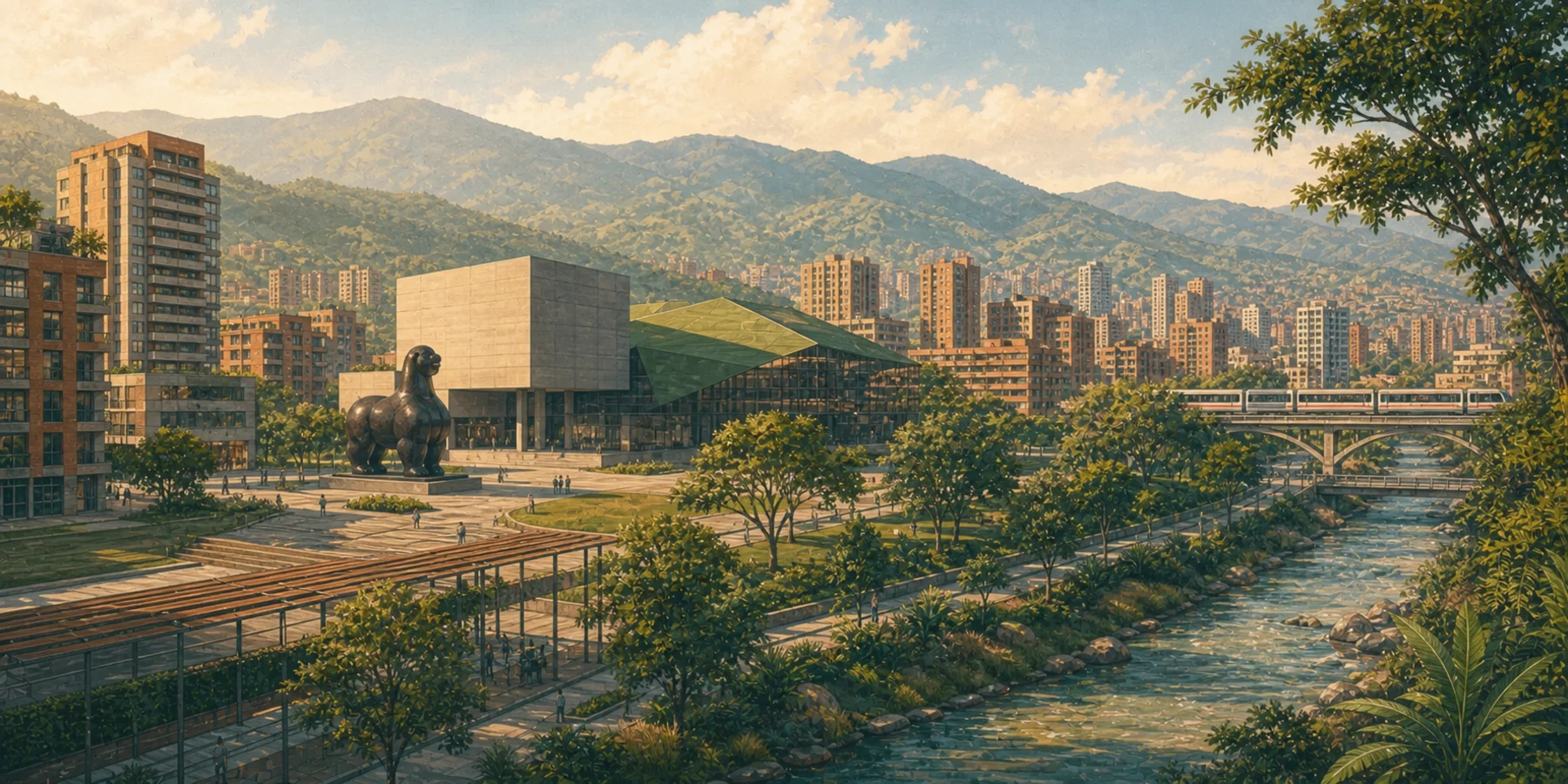
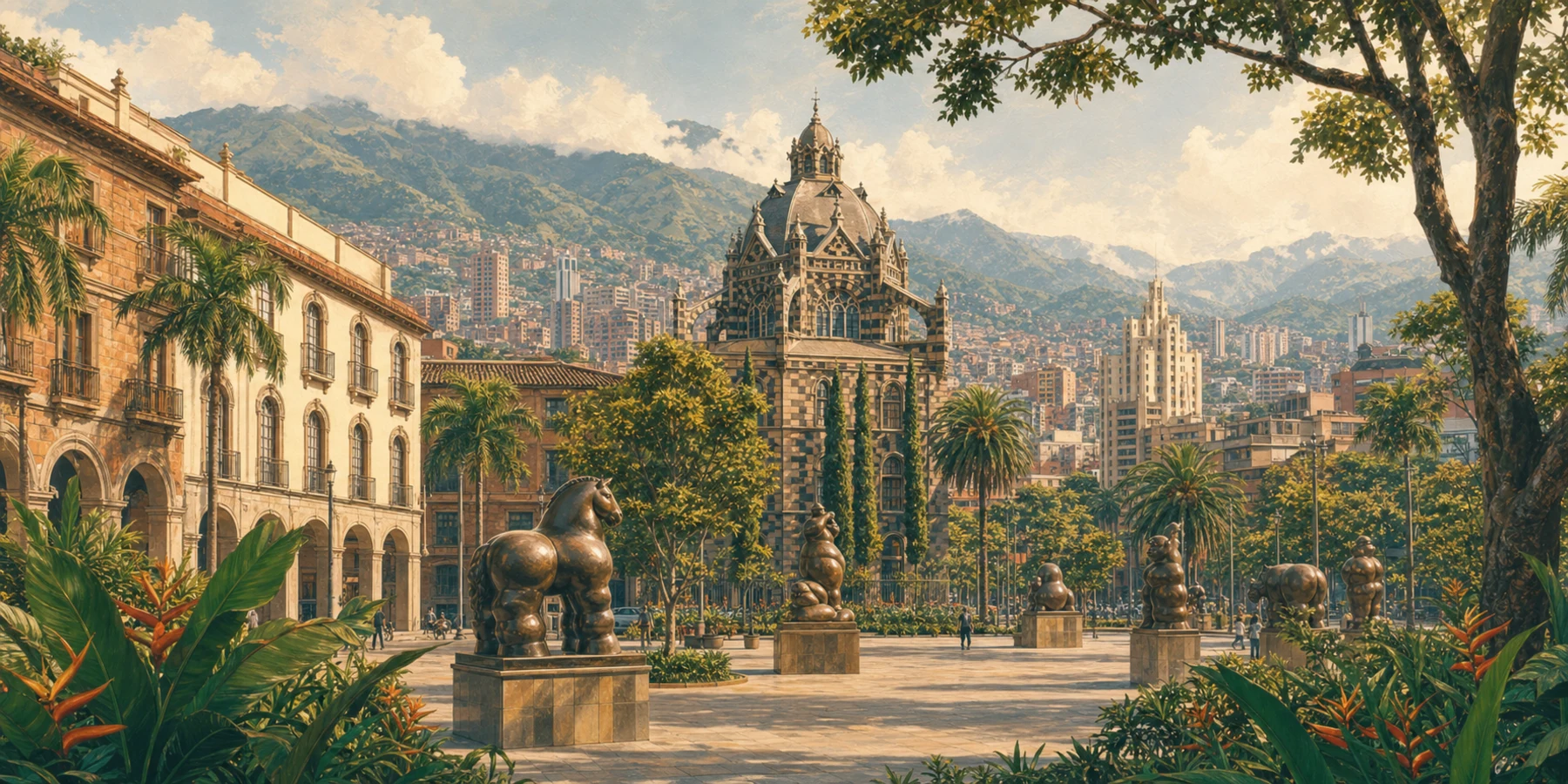
El Centro is dense with landmarks. The centrepiece is Plaza Botero, an open-air display of monumental Fernando Botero sculptures, with the excellent Museo de Antioquia right beside it housing an important art collection. Nearby stands the ornate Palacio de la Cultura Rafael Uribe Uribe, a striking piece of architecture, while Parque Berrío and Parque de Bolívar anchor the civic geography. The Catedral Metropolitana presides over Parque de Bolívar, and Plaza Cisneros, also known as Plaza de las Luces, offers its distinctive forest of tall illuminated pillars.
This concentration of sights makes El Centro the city's richest area for a day of exploring on foot, and a guided walking tour is genuinely worthwhile here, both for the historical context and for the confidence of a local guide in a busy environment. Museum hours change and some sights keep reduced times, so confirm directly before you go, especially on Sundays and public holidays. Plan your route to link the plazas and museums efficiently, and treat the whole quarter as a single, walkable open-air lesson in the city's history.
Where to eat and drink
Eating in El Centro is firmly a daytime, working-city affair. The area teems with traditional lunch spots, market food, street vendors, bakeries, and no-frills comedores serving hearty Colombian fare at low prices to the crowds who work and shop here. A menú del día lunch, an arepa from a stall, a fresh juice, or an empanada on the move is the authentic way to eat, and it is cheap and genuine. This is fuel for a day of exploring rather than a destination dining scene, and it suits the setting perfectly.
What El Centro does not offer is an evening dining scene, because the area empties and shutters after the working day. Plan your meals around daytime and early afternoon, when everything is open and buzzing, rather than counting on dinner here. As always with a fast-changing, informal food landscape, treat any single recommendation as a starting point, follow the busy local spots, and confirm hours where you can, remembering that many places keep shorter times or close entirely on Sundays and public holidays.
Coffee, cafés and coworking
For coffee, El Centro offers the traditional paisa experience in abundance: countless spots serving strong tinto to a working clientele, plus historic cafés around the plazas with real character and a sense of the city's commercial past. Grabbing a coffee here is part of soaking up the atmosphere, and the traditional, unpretentious cafés are a pleasure by day. It is an experience to enjoy as a visitor rather than a curated speciality-coffee scene, and it fits the energetic, workaday mood of the quarter.
For actual remote work, El Centro is not a work base, and it is worth stating plainly. The noise, crowds, intensity, and after-hours emptiness make it thoroughly unsuited to a working routine, and it has none of the calm or infrastructure that focused days require. Base your work life in a quieter, residential area instead, such as Barrio Manila in El Poblado, where StrataSix provides a proper desk and reliable fibre internet in a calm setting. Visit El Centro for its history and energy by day, and do your actual work somewhere altogether calmer.
Nightlife and evenings out
This is the section where honesty matters most: El Centro is not a nightlife destination, because it empties and shutters after the working day. As the shops close and the office workers and shoppers head home, the crowds that give the area its daytime vitality drain away, and the historic core becomes quiet, deserted, and best avoided by casual visitors after dark. The energy that defines El Centro is entirely a daytime phenomenon, and it does not carry over into the evening in any welcoming way.
For nights out, you should look entirely to other parts of the city. El Poblado's international nightlife hubs and the more local Colombian scene along the La 70 corridor in Laureles are the obvious destinations, both easily reached and both offering the safe, lively evenings that El Centro does not. Plan your time here to wrap up in daylight or the early evening, then head to your base or out to a nightlife area elsewhere. Treat El Centro as a place you leave before dark, not one you go out in.
Parks, green space and staying active
Green space is not why you come to El Centro. This is a dense, built-up, commercial quarter of plazas, streets, and civic buildings, and its open spaces are urban squares rather than parks: Parque Berrío, Parque de Bolívar, and Plaza Cisneros are civic and hardscaped, designed for gathering, commerce, and events rather than recreation or nature. They are worth seeing as landmarks and social spaces, but they are not places to relax on the grass or find greenery and calm.
For anything active or genuinely green, you will head elsewhere in the city, where proper parks, sports facilities, and running space are readily available in more residential areas. El Centro is somewhere you walk a great deal while exploring on foot, which is exercise of a kind, but it offers nothing in the way of parkland, gardens, or dedicated recreational green space. Do not choose to spend time here for the outdoors; choose it for history, culture, and the energy of the working city instead.
Everyday life: groceries, services and daily needs
For everyday shopping and services, El Centro is paradoxically one of the most commercial places in the entire city, packed with shops, markets, wholesalers, and specialist streets selling just about everything imaginable at competitive prices. If you need to buy something specific and cheap, from electronics to fabric to hardware, the centre's dense, specialised commercial streets are often the place to find it, and locals travel in from across the city precisely to shop here. As a place to buy things by day, it is unmatched.
As a place to handle daily life as a resident, though, it makes little sense, because so few people base themselves here and the practical rhythms of the area are built around commerce and civic functions rather than comfortable living. The services skew towards the transactional and the traditional, with little international or visitor-facing provision. Confirm opening hours directly, as many businesses keep variable times and reduce or close on Sundays and public holidays. Come to shop and to see, then handle the settled parts of daily life from a residential base elsewhere.
Safety and practical notes
Safety deserves clear, practical attention in El Centro, without either alarm or complacency. This is a dense, crowded, commercial area where petty theft and opportunistic crime are the realistic concerns, so the standard advice is firm: explore on foot in daylight, keep valuables and expensive phones out of sight, carry only what you need, and stay alert in crowds and around transport hubs. A discreet, aware posture makes an enormous difference, and most daytime visits pass entirely without incident when you follow these habits.
Two points bear repeating. First, this is very much a daytime area: it empties and shutters after the working day, and the deserted evening streets are best avoided, so plan to leave before dark. Second, a guided introduction genuinely adds value on a first visit, giving you both historical context and the reassurance of local knowledge in a busy environment. Arrive and leave by metro, stick to well-trafficked routes, keep your wits about you, and El Centro is a rewarding and manageable place to explore.
Cost and value
On cost, El Centro is one of the cheapest parts of the city for what it primarily offers, which is shopping, eating, and sightseeing by day. Market food, street eats, and traditional lunches are inexpensive, museum entry is modest, and the commercial streets are known for competitive prices, so a day of exploring here costs very little. As a day-trip destination, the value is excellent: enormous cultural and historical reward for minimal outlay, plus cheap, cheap and cheerful eating along the way.
As accommodation, the value question is largely moot, because it is not a sensible base for most visitors regardless of price. Whatever savings the area might appear to offer on lodging are outweighed by the noise, intensity, after-dark emptiness, and safety considerations that make it unsuitable for a comfortable stay. Spend your money on a calmer residential base elsewhere and treat El Centro as the low-cost, high-value day destination it truly is. Confirm current prices and hours directly, as informal pricing varies.
How to decide
Deciding on El Centro is refreshingly simple, because it is a where-to-visit rather than a where-to-stay question. Choose to spend a day here if you are curious about the city's history, architecture, museums, and working-city energy, and especially if you value understanding Medellín beyond the expat bubble. Go in daylight, ideally with a guide on a first visit, keep valuables out of sight, and plan to leave before the area empties after the working day. As a cultural day out, it is one of the city's essential experiences.
Do not choose El Centro as a place to base yourself, work, or spend your evenings, because it is intense, noisy, deserted after dark, and simply not built for comfortable living or reliable remote work. Base yourself instead in a calmer, residential neighbourhood, such as Barrio Manila in El Poblado, and travel into El Centro by metro for a rewarding daytime visit. The honest summary: an unmissable place to experience by day, and a place to be somewhere else by night.
Frequently asked questions
Should I stay in El Centro / La Candelaria?
For most visitors, no. It is intense, noisy, and empties and shutters after the working day, which makes it a poor base for comfortable living or remote work. Treat it as an essential daytime destination to visit by metro, and base yourself somewhere calmer and residential, such as Barrio Manila in El Poblado.
Is El Centro safe to visit?
Yes, with sensible habits. Explore on foot in daylight, keep valuables and phones out of sight, carry only what you need, and stay alert in crowds and near transport hubs. Petty theft is the realistic concern, not dramatic crime. Leave before the area empties after dark, and consider a guided tour on a first visit.
What are the main sights in El Centro?
Plaza Botero with its monumental Botero sculptures and the adjacent Museo de Antioquia, the ornate Palacio de la Cultura Rafael Uribe Uribe, Parque Berrío, Parque de Bolívar with the Catedral Metropolitana, and Plaza Cisneros, also called Plaza de las Luces. Confirm museum hours directly, especially on Sundays and public holidays.
How do I get to El Centro?
By metro, easily. It is the city's most connected area, with stations such as Parque Berrío and San Antonio placing you right among the sights. Arrive and leave by metro in daylight, explore the walkable historic core on foot, and avoid driving, since the streets are heavily congested.
Is there nightlife in El Centro?
No. The area empties and shutters after the working day, becoming quiet and deserted, and is best avoided by casual visitors after dark. For evenings out, head to El Poblado's nightlife hubs or the La 70 corridor in nearby Laureles, both easily reached and far better suited to a night out.
Can I work remotely from El Centro?
It is not a work base. The noise, crowds, and after-hours emptiness make it unsuited to focused work, and it lacks the calm and infrastructure a working routine needs. Do your work from a quieter residential area, such as Barrio Manila in El Poblado, and visit El Centro for its history and energy by day.