Regions
Santa Elena: Flowers, Forest and Cool Air Above Medellín
The green highland corregimiento behind the flower farms and Parque Arví, reachable by a scenic cable car.
In this guide
Why go: the character of Santa Elena
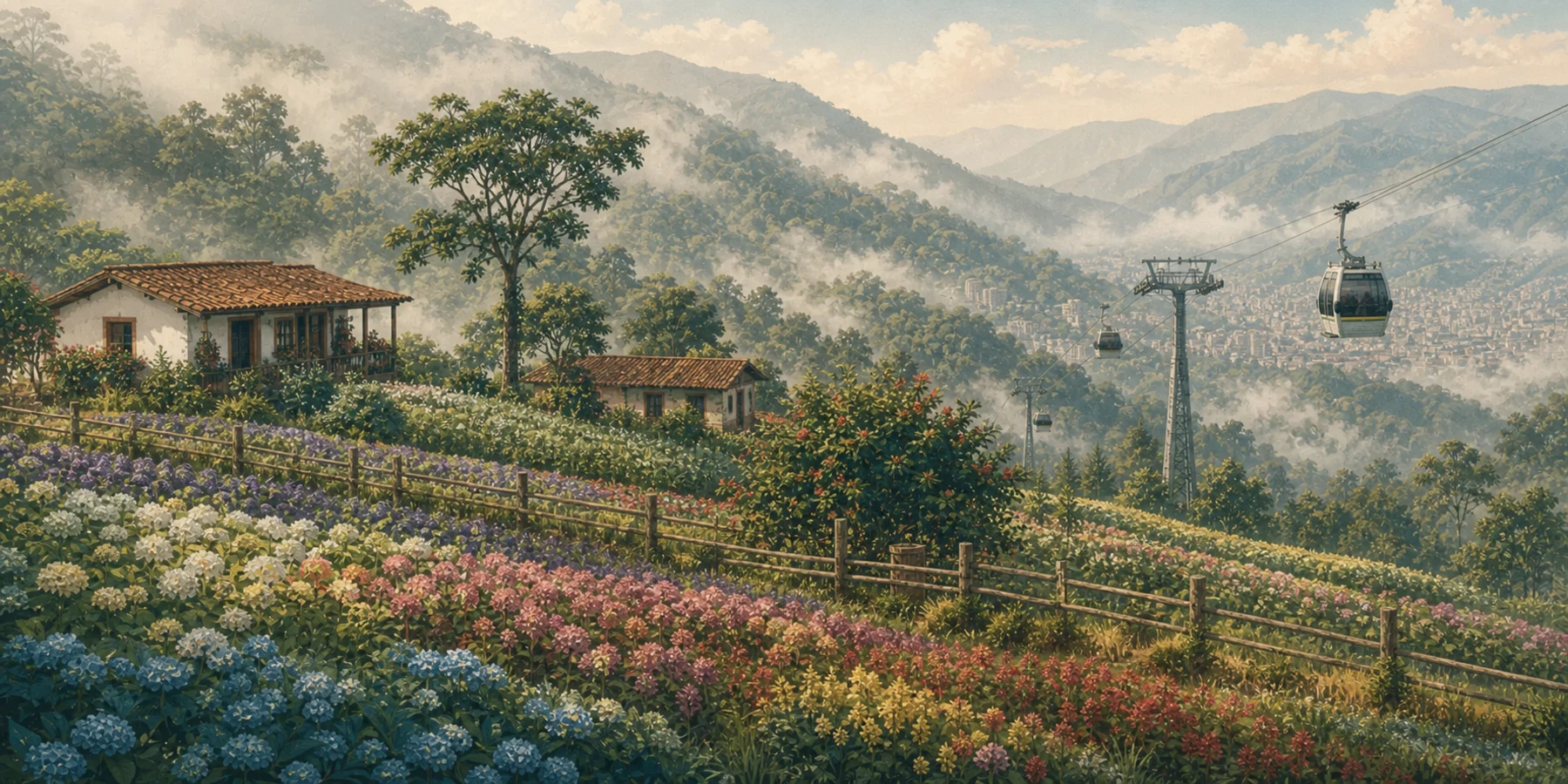
Santa Elena is the green highland corregimiento that sits east and above Medellín, close enough to reach in an easy morning yet different enough in feel to count as a proper change of scene. Where the valley floor is warm, dense and busy, Santa Elena is cool, forested and rural: pine and eucalyptus, low cloud that drifts through the trees, roadside stalls, and small farms strung along winding lanes. This is flower country, home to the silletero families who grow the blooms carried in Medellín's Feria de las Flores and its Desfile de Silleteros, and that farming tradition still shapes the landscape you drive through.
You go for the air, the quiet and the forest more than for a checklist of sights. It is the kind of place where the pleasure is walking a marked trail under tall trees, buying something hot from a stall, and looking back down over the valley you came from. Set your expectations accordingly. Connectivity is patchy once you leave the main road, services are thinner than in the city, and everything runs on rural rhythms. Treat it as a restorative day out from your base in Barrio Manila, El Poblado, not as a place to answer emails.
Getting there
The distinctive way up is the Metrocable, the aerial cable-car network that links to the metro and carries you over the eastern ridge toward the Parque Arví area. It is scenic, well used and a genuine attraction in its own right, though it runs on set operating days and hours and is affected by weather and maintenance, so confirm before you commit your day to it. You ride the metro to the connecting station, transfer to the relevant cable-car line, and continue up; note that the Arví line is separate from the commuter lines and has its own schedule, so check both the running days and the last return time.
By road, Santa Elena is a climb into the mountains by car or arranged transport, with the reward of viewpoints along the way. Use trusted transport rather than flagging something unknown, agree the fare or route in advance, and favour daylight for the mountain roads in both directions. If you drive yourself, go slowly on the bends and allow for fog. Whichever way you go up, plan to come back down with daylight to spare; the roads are quieter and less forgiving after dark, and the cable car stops running earlier than you might expect.
Things to see and do
The headline draw is Parque Arví, a large forest reserve of marked trails, streams and the Piedras Blancas area, with clusters of food stalls and small markets near the main access points. It is best approached as a walking destination: pick a signed route that matches your time and fitness, stay on the approved paths, and keep to the maintained network rather than wandering off into unmarked forest. Some sections you can do independently; for longer or less obvious routes, a local guide is worth arranging, both for orientation and for the context they add about the trees, water and birdlife. Bring water, snacks and a warm layer, because the weather turns quickly at this altitude and the shade under the canopy is cool even on a bright day.
Beyond the reserve, the flower-growing tradition is the other great reason to be here. Several silletero fincas welcome visitors for a look at how the flowers are grown and how the elaborate silletas carried in the Medellín parade are built, and a visit is far more rewarding than simply reading about it; ask locally or through your accommodation about which farms are receiving visitors and confirm timings, as many operate by appointment rather than fixed opening hours. If your trip lands during the Feria de las Flores, usually in the warmer middle of the year, the whole corregimiento takes on extra energy in the run-up to the Desfile de Silleteros, and it is worth understanding that the parade itself happens down in the city while its roots are up here.
The third thread is simply the landscape. Viewpoints along the ridge give you long looks over the valley and the lights of Medellín, and they are at their best in clear weather early in the day before cloud builds. Weekend markets and roadside stalls sell flowers, plants, produce and hot food and are a low-key pleasure in their own right, worth a slow browse rather than a quick stop. Cyclists and walkers use the quieter lanes, and a gentle wander on foot, staying aware of traffic on the narrow roads, is one of the nicest ways to spend an hour. Photographers should plan around the light and the fog, both of which can be dramatic and both of which can close in without warning.
Where to eat and drink
Eating in Santa Elena is rustic and straightforward rather than a dining scene. Around the Arví access points and along the main road you will find stalls and simple establishments serving hot drinks, arepas, empanadas, sausages and the kind of warming plates that suit the cool air, plus the occasional sit-down spot doing a traditional lunch. It is honest, filling food eaten in the open or under a shelter, and part of the appeal is exactly that unpretentiousness. Carry cash in small denominations, because many stalls do not take cards and connectivity for mobile payments is unreliable once you are off the main road.
For anything beyond the basics, manage expectations and confirm before you rely on a place. Fincas and rural restaurants may serve set meals by arrangement, hours can be shorter than posted, and options thin out midweek and in poor weather. A sensible approach is to eat your main meal around midday when more is open, treat a hot drink from a stall as a reliable pleasure at any time, and keep a snack in your bag for the trail. If you have a specific place in mind, check the day and time it is actually operating rather than assuming.
Where to stay
Most people treat Santa Elena as a day trip and sleep back in the city, and for a first visit that is the straightforward choice. If you do want to stay, the offering is rural: guesthouses, cabins and finca-style lodging scattered along the lanes, chosen for quiet, cool nights and forest surroundings rather than for convenience or nightlife. Expect wood fires or extra blankets, simple comforts, and a genuine sense of being away from the city, along with the trade-offs that come with that: limited services nearby, patchy internet, and the need to arrange transport for anything you cannot reach on foot.
Book ahead and confirm the practicalities directly, because availability, access and what is actually included vary a great deal from place to place. Ask specifically about how you reach the property, whether meals are provided or you need to bring supplies, how reliable the power and water are, and what the connectivity is really like if that matters to you. An overnight rewards those who want stars, cool air and birdsong at dawn; it frustrates anyone expecting city convenience. For a working trip, keep your base in Barrio Manila and come up here to switch off, not to log on.
When to go, weather and what to pack
The defining fact of Santa Elena is that it is noticeably cooler and wetter than the valley, and you should pack as if you are going somewhere else entirely, because you are. Bring a warm layer or two, a waterproof, sturdy shoes with grip for damp trails, and something to keep a bag dry. Even on a day that starts bright in Barrio Manila, expect cloud, cooler temperatures and the real chance of rain up top; the forest holds moisture and the light changes fast. Mornings are generally clearer and calmer, so an early start gives you the best of the views before cloud builds through the afternoon.
Medellín does not have strong seasons in the northern sense, but there are wetter and drier stretches through the year, and the higher ground feels the rain more. If your visit coincides with the Feria de las Flores, usually mid-year, the flower theme is at its peak and the atmosphere is a genuine draw, at the cost of bigger crowds and busier transport. Whenever you go, check the cable-car and park operating days close to your trip, since weather and maintenance can affect them, and keep your plan flexible enough to swap a foggy forest walk for a market and a viewpoint if the weather closes in.
Practical tips
Build your day around daylight and trusted transport. Go up in the morning, keep an eye on the last cable-car return, and plan to be heading down with time in hand rather than chasing the last light on mountain roads. Use arranged or reputable transport rather than unknown vehicles, agree the fare or route before you set off, and do not count on hailing a ride easily from the more remote spots. Carry cash in small notes for stalls, entry points and transport, since cards and mobile payments are unreliable here, and keep your phone charged given the patchy signal.
Respect the setting and stay within it. Keep to approved trails and marked routes in Arví, follow signage and any guidance from park staff, and do not push off-path into the forest. Dress for cold and wet even when the city is warm, take water and a snack, and pace yourself for the altitude, which is higher than the valley and can leave you more tired than expected. Tell someone your rough plan if you are heading onto longer trails, and treat the weather as the thing most likely to reshape your day. General caution, daylight and cash will cover most of what Santa Elena asks of you.
Day trip or overnight: the verdict
For most visitors, Santa Elena is a half-day or full-day trip and is all the better for it. You can ride the cable car up, walk a stretch of Arví, take in a viewpoint, eat something hot from a stall and be back in the city by evening, having genuinely changed pace without committing your whole itinerary. That rhythm suits a remote worker basing in Barrio Manila especially well: a clear, offline day in the forest bookended by the comforts and connectivity of the city, with no need to solve the logistics of a rural night.
Stay over only if the quiet is the point. An overnight rewards those who specifically want cool air, dark skies, birdsong and a finca setting, and who are relaxed about limited services and unreliable internet. If that is you, book ahead and confirm the details. If you mainly want the forest, the flowers and the views, treat Santa Elena as the easy, restorative day trip it does best, and save the deeper rural stays for a return visit when you know what you are choosing.
Frequently asked questions
How do I get to Santa Elena and Parque Arví without a car?
Take the metro to the connecting station and transfer to the Arví cable-car line, which is separate from the commuter lines and runs on its own schedule. Confirm the operating days, hours and last return before you go, as weather and maintenance can affect them.
Is one day enough?
Yes. A half or full day is plenty to ride up, walk a marked trail in Arví, see a viewpoint and browse a market or stall. Most people return to the city the same evening rather than staying over.
Can I work from Santa Elena?
Not reliably. Connectivity is patchy and services are thinner than in the city, so treat it as a place to switch off. Keep your working base in Barrio Manila and come up here for a day out.
What should I pack?
A warm layer, a waterproof, shoes with grip for damp trails and cash in small notes. It is noticeably cooler and wetter than the valley, so dress as if for a different climate even when the city is warm.
When is the flower tradition most visible?
The silletero fincas can be visited year round by arrangement, but the atmosphere peaks around the Feria de las Flores, usually mid-year, when the Desfile de Silleteros takes place down in the city. Confirm which farms are receiving visitors and their timings.
Are the trails safe to explore alone?
The marked, maintained routes in Arví are fine for independent walkers who stay on approved paths. For longer or less obvious routes, arrange a local guide, carry water and a snack, travel in daylight and plan to be back down before dark.