Regions
Santa Fe de Antioquia: Colonial Heat and History
A hot, well-preserved colonial town northwest of Medellín, known for whitewashed streets and the Puente de Occidente.
In this guide
Why go: the character of Santa Fe de Antioquia
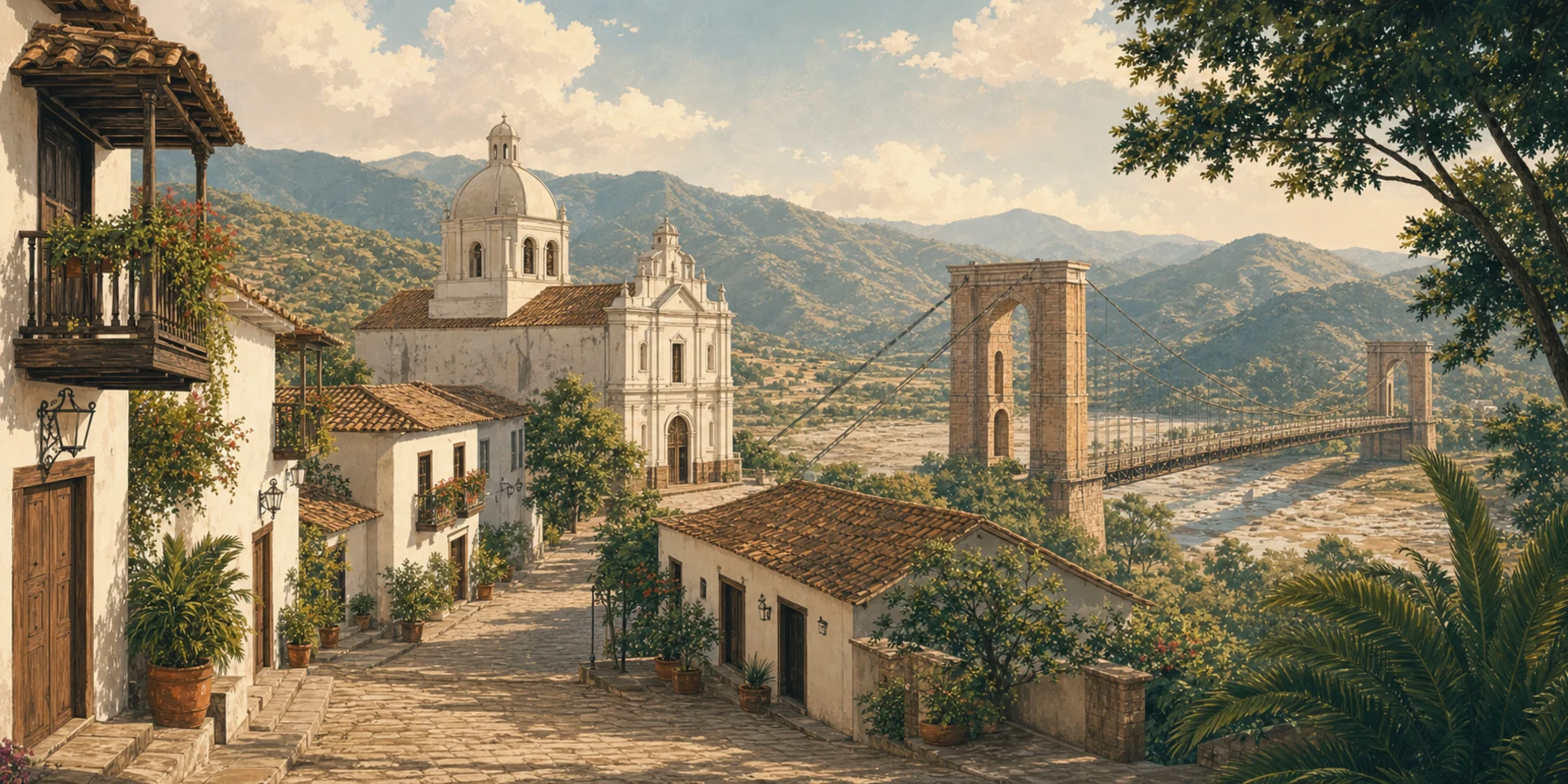
Santa Fe de Antioquia is a well-preserved colonial town north-west of Medellín, and for a long stretch of history it was the region's capital before that role passed to the city. That heritage shows in its fabric: cobbled streets, whitewashed single-storey houses with heavy wooden doors, and a cluster of churches and plazas that have survived largely intact. Walking the centre feels like stepping back several centuries, and the town wears its history lightly rather than turning it into a museum piece. It is compact, atmospheric, and easily explored on foot, which makes it one of the most accessible windows onto colonial Antioquia within reach of the city.
The first thing to understand about Santa Fe, though, is its climate. The town sits low, in the hot Cauca valley, and is markedly warmer than Medellín's spring-like air. That single fact should shape your whole visit. You travel out from the city, most likely from a base such as Barrio Manila in El Poblado, and descend into real heat, which is why colonial posadas here so often come with pools and why the town runs on active mornings and evenings with a slow, shaded middle of the day. Embrace that rhythm rather than fighting it. Come for the colonial streets and the history, but plan around the heat, and Santa Fe becomes a genuinely relaxing escape rather than an exhausting one.
Getting there
Santa Fe de Antioquia lies north-west of Medellín and is one of the more accessible towns in this region, reached by a shorter drive than Jardín or even Guatapé, though still through mountainous terrain. The journey is considerably eased by the Túnel de Occidente, a long road tunnel that cuts through the mountains and removes much of the slow climbing that once made the trip longer. The most comfortable option is trusted private transport, whether a driver or a pre-booked car, which gives you flexibility for the day and lets you stop at the Puente de Occidente on the way in or out. Buses run regularly from Medellín's terminal and are inexpensive, making Santa Fe one of the easier towns to reach by public transport.
Even with the tunnel, there are mountain sections on the drive, so favour daylight and unhurried timing, particularly if you self-drive. If you are visiting for the day, aim to arrive in the morning to enjoy the town before the midday heat builds, and plan your return with the heat and the light in mind. Carry cash, since smaller establishments and vendors may not take cards, and download maps and any confirmations, as signal can be less reliable than in the city. The relative ease of getting here is a real advantage, but it does not remove the need for the usual sensible travel habits.
Things to see and do
The signature sight is the Puente de Occidente, a 19th-century suspension bridge spanning the Cauca river a short way outside town. In its day it was an engineering landmark, and it remains a graceful, atmospheric structure well worth the short trip out to walk across and take in the river and valley. Pair it with your arrival or departure to make the most of the timing, ideally in the cooler morning or late-afternoon light rather than the full heat of midday. Back in the centre, the Plaza Mayor is the heart of the town, a classic colonial square lined with historic buildings and shaded spots to sit, and it is the natural starting point for exploring on foot.
The town's churches are its other great draw. The Catedral Basílica Metropolitana anchors the main plaza with its imposing colonial presence, while the Iglesia de Santa Bárbara, with its own square, is among the most photographed and beautiful in town. Even a short walk between them takes you past a succession of colonial facades, cobbled lanes, and quiet corners that reward slow wandering. For a deeper sense of the town's past, the Museo Juan del Corral gathers regional history and colonial artefacts, and makes a good cool retreat during the hotter part of the day when walking the streets is less appealing. Confirm opening hours locally, as small-town museums and churches keep variable schedules.
Beyond the built heritage, part of Santa Fe's pleasure is simply in its atmosphere and its sweets. The town is known for tamarindo, the sticky tamarind-based confections sold around the centre, and seeking them out is a pleasant, low-effort way to spend part of an afternoon. The right way to structure a day here follows the climate: walk the streets, cross the bridge, and see the churches in the morning while it is cooler; retreat to shade, a museum, a long lunch, or a pool through the hottest hours; and come back out in the late afternoon and evening when the town cools and the plazas fill again. That rhythm is not a compromise but the local way of doing things, and it makes the difference between a tiring visit and a restful one.
Where to eat and drink
Eating in Santa Fe centres on the Plaza Mayor and the surrounding colonial streets, with a spread of restaurants and cafés set in historic buildings, alongside simpler local eateries. Expect traditional Antioquian and Colombian food: grilled meats, set lunches, regional dishes, and lighter fare suited to the heat, together with cafés and juice spots that are welcome refuges when the sun is high. The town's tamarindo sweets are the local speciality to seek out, sold by vendors and shops around the centre, and they make an easy gift or afternoon treat. As always in a small town, confirm hours directly, since some places keep shorter or irregular schedules, particularly midweek and in quieter seasons.
Let the climate guide your eating as much as your sightseeing. A long, shaded lunch through the hottest part of the day fits the local rhythm perfectly, and cold drinks and fresh juices are more than a luxury here. In the cooler evening, the plazas come back to life and are a pleasant setting for a relaxed dinner. Keep some cash on hand for smaller establishments and street vendors, ask your lodging for current recommendations since openings shift, and do not plan on late dining without checking, as kitchens can close earlier than in the city.
Where to stay
Accommodation in Santa Fe is dominated by colonial posadas and boutique hotels set within the historic centre, many of them in restored old houses arranged around leafy courtyards, and, crucially in this climate, often with pools. A pool is close to essential here, and a central posada with one gives you the best of both worlds: colonial character, a walkable location, and somewhere to cool off through the hottest hours. There are also larger resort-style hotels and fincas on the outskirts, which lean more heavily on pools and grounds but trade the immediate charm and walkability of the centre for a quieter, more self-contained stay.
Whichever you choose, book ahead for weekends and Colombian holidays, when this popular and accessible town fills quickly, and confirm what is included, especially air conditioning or fans and pool access, which matter a great deal given the heat. Services and connectivity are more limited than in the city, so do not assume fast, reliable wifi; treat this as a holiday base rather than a work base. If staying central, a courtyard posada with a pool is the classic and most comfortable choice, letting you step straight out into the colonial streets in the cool hours and retreat to shade and water in the heat.
When to go, weather and what to pack
The defining feature of Santa Fe's climate is heat. Sitting low in the Cauca valley, it is consistently much warmer than Medellín, hot and often humid through the day year-round, with the midday hours genuinely intense. There is no cool season to speak of in the way there is at altitude, so rather than choosing a month for temperature, choose your daily timing: active mornings and evenings, rest through the heat of the day. Weekdays and quieter seasons are calmer, while weekends and Colombian holidays bring more visitors to what is already a popular, easy-to-reach town.
Pack firmly for heat and sun. Bring light, breathable clothing, a hat, strong sun protection, and a refillable water bottle, and plan to drink more than you think you need. Swimwear is close to essential given how central pools are to staying comfortable here. Comfortable shoes suited to cobbled streets are worth having, and a light layer is rarely needed given the warm evenings. As elsewhere in the region, carry enough cash, since card acceptance is inconsistent and signal can be patchy, and consider a power bank for long days out.
Practical tips
Plan the whole visit around the heat and you will enjoy Santa Fe far more. Do your walking, the bridge, and the churches in the cooler morning and late afternoon, and use the middle of the day for a shaded lunch, the museum, or a pool. Stay hydrated, wear sun protection, and do not try to power through the midday hours on your feet, which is the quickest way to exhaust yourself. This single principle matters more here than at any of the cooler mountain towns in the region.
Handle the usual logistics as well. Use trusted transport, favour daylight for the mountain sections of the drive despite the ease the tunnel brings, and carry cash for vendors, sweets, and smaller establishments that may not take cards. Treat connectivity as less reliable than in the city, downloading maps and confirmations in advance, and confirm opening hours locally for churches, the museum, and restaurants, all of which vary. Keep the framing right too: with limited services and connectivity, Santa Fe is a holiday base rather than a place to work, so settle city commitments before you go.
Day trip or overnight: the verdict
Santa Fe de Antioquia is unusual among these towns in genuinely working both ways. Its relative closeness, helped by the Túnel de Occidente, means a well-paced day trip is entirely feasible: arrive in the morning, see the bridge, the churches, and the plazas before the heat peaks, take a long lunch, and head back in the afternoon or early evening. If your time is limited, that makes for a satisfying single day, and the ease of getting here is a real point in its favour.
That said, an overnight lets Santa Fe show a different and arguably better side. Staying over means you can rest through the fierce midday heat without watching the clock, enjoy the town in the cool of the evening when the plazas come alive, and make full use of a posada pool. The trade-offs are modest compared with the more distant towns, mostly the heat itself and the usual limits on services and connectivity. For a relaxed pace and the pleasure of a lamplit colonial evening, an overnight is the richer choice, but unlike Jardín, Santa Fe rewards you fairly even if all you have is a day.
Frequently asked questions
How far is Santa Fe de Antioquia from Medellín?
It is one of the closer towns in the region, north-west of the city and eased by the Túnel de Occidente, which cuts out much of the old mountain climbing. Buses run regularly from the terminal, and trusted private transport gives you the most flexibility.
Is it better as a day trip or an overnight?
It works well both ways. The relative closeness makes a well-paced day trip feasible, while an overnight lets you rest through the midday heat and enjoy the cooler, livelier evenings and a posada pool. Both are valid depending on your time.
How hot does it get?
Much hotter than Medellín. Santa Fe sits low in the Cauca valley and is warm year-round, with intense midday heat. Plan active mornings and evenings, rest through the middle of the day, and bring sun protection, water, and swimwear.
What is the Puente de Occidente?
A 19th-century suspension bridge over the Cauca river just outside town, once an engineering landmark and still a graceful structure worth walking across. Visit it in the cooler morning or late afternoon, and pair it with your arrival or departure.
Why do so many places have pools?
Because of the heat. Given how warm Santa Fe is, a pool is close to essential for staying comfortable, which is why colonial posadas and hotels here so often have one. Confirm pool access and air conditioning or fans when you book.
What are the tamarindo sweets?
Tamarindo is the town's local speciality, a sticky tamarind-based confection sold by vendors and shops around the centre. Seeking them out is an easy and pleasant part of an afternoon, and they make a simple gift to take home.