Regions
Rionegro and the Airport Plateau: Calmer Highland Living
The cooler plateau town around José María Córdova airport, with lakes, country homes and easy departures.
In this guide
Why go: the character of Rionegro
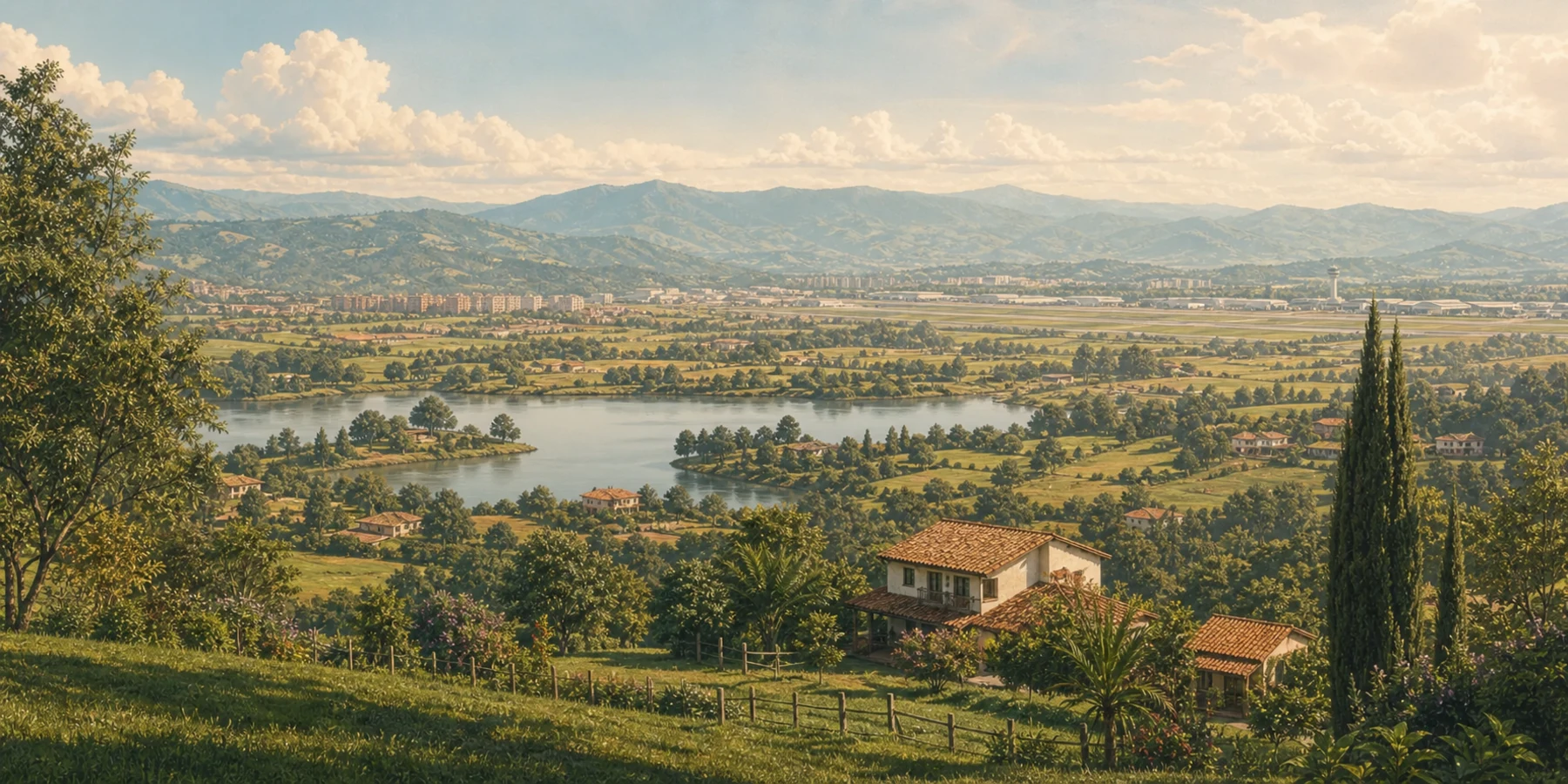
Rionegro sits on the cool highland plateau east of Medellín, the part of Antioquia known as the Oriente, and for most travellers it is the first or last piece of Colombia they see, because José María Córdova international airport (code MDE) is here rather than in the city. That role as the main gateway shapes how people treat it: a place passed through on the way in and out. Give it a little more attention, though, and Rionegro reveals itself as a proper highland town with genuine history, an easy pace and a plateau of country houses, farmland and reservoirs spreading out around it.
The character is calmer and cooler than the valley below. Days are mild, evenings can be cool enough for a jacket, and the surrounding Llanogrande area is dotted with fincas and weekend homes that tell you how Medellín escapes the heat. Rionegro itself carries real weight in Colombian history as the site of the 1863 constitutional convention, and its old centre and cathedral reward a slow look. Come with the right frame of mind. This is highland surroundings, a comfortable finca stay, or a sensible last night before an early flight, rather than a base for daily exploring of central Medellín.
Getting there
The practical fact is the airport. If you are flying into MDE, you are already in Rionegro, and the town, the Llanogrande fincas and the wider Oriente are close by. If you are coming from El Poblado or Barrio Manila, the journey climbs out of the valley through the mountains and a tunnel onto the plateau, and while the distance is not huge, traffic can add significant time and cost, especially at peak hours and on weekends when city dwellers head for their country houses. Build in a generous buffer, particularly if you are catching a flight.
Use trusted transport for the climb: an arranged car, a reputable taxi or a booked ride rather than an unknown vehicle, and agree the route or fare in advance. Favour daylight for the mountain section where you can, and if you are timing an early departure, weigh a night near the airport against a pre-dawn drive up from the city. There is also public transport between Medellín and Rionegro, which is cheaper but slower and less flexible with luggage. Whichever you choose, treat the travel time as variable rather than fixed and give yourself margin.
Things to see and do
Start in Rionegro's historic centre, built around the main park with the Catedral de San Nicolás at its heart. It is a pleasant, walkable core of civic buildings, cafes and churches, and it rewards an unhurried stroll more than a tick-list visit. Rionegro's place in the country's story is the thread to follow here: this was the site of the 1863 constitutional convention, and the town wears that history in its monuments and public spaces. A slow morning taking in the park, the cathedral and the surrounding streets, with a coffee stop, gives you the measure of the place and a sense of an Antioquian town that is not simply an airport suburb.
The Llanogrande area is the other main draw and a rather different experience: a spread of country houses, fincas, golf and the kind of relaxed, green, well-to-do surroundings that Medellín families come to for the weekend. You do not so much sightsee here as settle in, whether that means staying at a finca, dining at a country restaurant, or simply enjoying the cooler air and open landscape. It is worth understanding that this is a dispersed, car-dependent area rather than a compact one, so plan how you will get between places and do not expect to stroll from one to the next.
The wider Oriente opens up from Rionegro and turns the area into a genuine base for exploring the plateau. Reservoirs in the region draw people for water views and lakeside settings, and there are family and nature parks in the surrounding countryside that suit a day out, particularly with children. Confirm opening days, access and any need to book before you rely on a specific attraction, since many operate on their own rhythms and are busier at weekends. Keep in mind that Guatapé, with its famous rock and reservoir, lies in this same general direction and has its own guide; it is a bigger, longer excursion best planned on its own rather than squeezed onto a Rionegro day.
Nearby towns make the most rewarding way to fill out a visit. El Retiro, La Ceja and Marinilla each offer a compact centre, a distinct character and the everyday texture of the Oriente, and hopping between one or two of them by arranged transport gives you a fuller picture than staying put. Approach them as unhurried half-day outings: a plaza, a church, a market, a lunch, a look at local life. Travel in daylight on the connecting roads, keep some cash on hand, and let the pace stay slow. The point of the Oriente is not intensity but a mild, green, historic plateau you can move through gently.
Where to eat and drink
Eating around Rionegro spans two moods. In the historic centre you will find cafes, bakeries and traditional establishments serving Antioquian staples and good coffee, well suited to a break between wandering the park and the cathedral. Out in Llanogrande and along the country roads, the picture shifts to finca-style and country restaurants set among the greenery, the sort of place families settle into for a long weekend lunch. Both are pleasant; the centre is walkable and casual, while the country spots usually require transport and reward a booking, especially at weekends.
Because the good country restaurants can be spread out and popular, confirm hours and availability before you set off, and do not assume a place is open midweek or that you can simply turn up at busy times. Carry some cash even where cards are accepted, since connectivity for payments can be patchy away from the centre. If you are staying at a finca, ask whether meals are provided or whether you should plan around nearby restaurants and stock up in town, as options can be sparse once you are out among the country houses.
Where to stay
Rionegro and the Oriente suit two kinds of stay. The first is the finca: a country house or rural lodging in Llanogrande or the surrounding plateau, chosen for cool air, greenery, space and quiet, often with a pool and grounds and a genuine sense of retreat. This is the area's signature experience and works well for a group, a family or anyone wanting a few slow days out of the city. Expect to depend on a car, to have services more spread out, and to trade urban convenience for calm and open country. Book ahead and confirm access, meals and what is included.
The second is the practical airport stay: a simple, comfortable night close to MDE before an early flight, which spares you a pre-dawn drive up from the city and the risk of traffic on the mountain road. For that purpose, prioritise proximity and reliability over character. What Rionegro is not is a natural base for exploring central Medellín day after day, since the mountain crossing adds real time and cost each way. If the city is your focus, stay in Barrio Manila and treat Rionegro as surroundings or a final night; if the plateau is the point, stay out here and let the city go.
When to go, weather and what to pack
Rionegro is cooler than the valley, sitting up on the plateau, so pack a layer or a light jacket for the evenings even when Medellín is warm, along with something waterproof. Days are generally mild and pleasant, good for wandering the centre or relaxing at a finca, but the highland air has a bite after dark and the weather can turn, so a bit of preparation goes a long way. Comfortable shoes for uneven old streets and a warm layer for cool nights cover most situations; if you are heading to reservoirs or nature parks, add sun protection and sturdier footwear.
There are wetter and drier stretches through the year rather than strong seasons, and the plateau catches its share of rain, so keep a waterproof handy whenever you visit. Weekends and Colombian holidays bring city dwellers out to their country houses, which lifts the atmosphere but also fills the roads and the better restaurants, so weigh that against a quieter midweek visit. If you are timing a stay around a flight, focus less on the calendar and more on giving yourself margin for traffic on the mountain road, which is the variable most likely to affect your day.
Practical tips
Plan around the mountain crossing and the airport, because those two things drive most of the logistics. Give yourself a generous buffer for traffic between the city and the plateau, especially before flights and at weekends, and use trusted, arranged transport rather than unknown vehicles for the climb through the tunnel and the bends. Favour daylight on the mountain roads where you can, agree fares or routes in advance, and if your flight is early, seriously consider a night near MDE instead of a pre-dawn drive up from El Poblado.
Out on the plateau, treat the Oriente as dispersed and car-dependent. Sort out how you will move between the centre, Llanogrande and any nearby towns before you go, carry cash in small notes for transport and country spots where payments can be patchy, and confirm the opening days of parks, reservoirs and restaurants rather than assuming. Keep the usual sensible habits: daylight for longer road trips, some cash on hand, and a flexible plan that can absorb a slower journey or a place that turns out to be closed. None of this is onerous; it simply reflects that you are in cooler, quieter, more spread-out country than the city.
Day trip or overnight: the verdict
Whether Rionegro is a day trip or an overnight depends entirely on why you are going. As a quick day out from the city it is honestly a stretch, because the mountain crossing eats into your time both ways and the area's pleasures, the finca calm, the country lunches, the slow plateau towns, unfold better at a gentler pace than a single there-and-back day allows. If you only have a day, you may find the travel outweighs the reward unless you are already heading that way for a flight.
Where Rionegro genuinely earns an overnight is in two situations. One is the finca stay, a few slow days on the cool green plateau, ideal for a group or anyone wanting to switch off out of the city. The other is the practical last night before an early flight from MDE, which removes the pre-dawn drive and the traffic gamble. For daily exploring of central Medellín, keep your base in Barrio Manila and let Rionegro be what it is best at: highland surroundings, a finca retreat, or a calm final night on the way out.
Frequently asked questions
Is Rionegro the same as Medellín airport?
The airport is José María Córdova (code MDE), and it sits in Rionegro on the highland plateau, not in Medellín itself. If you fly into MDE, you land in the Oriente and reach the city by crossing the mountains through a tunnel.
How long does it take to get between Rionegro and the city?
The road climbs through the mountains and a tunnel, and while the distance is modest, traffic can add significant time and cost, especially at peak hours and weekends. Treat the travel time as variable and build in a generous buffer, particularly before a flight.
Should I stay in Rionegro to explore Medellín?
Generally no. The mountain crossing adds real time and cost each way, so it is a poor daily base for the city. Stay in Barrio Manila for central Medellín, and use Rionegro for a finca stay or a last night before an early flight.
Is it worth a night before an early flight?
Often yes. A simple, comfortable stay near MDE spares you a pre-dawn drive up from the city and the risk of traffic on the mountain road. Prioritise proximity and reliability over character for that kind of night.
What is there to actually see in Rionegro?
The historic centre around the main park and the Catedral de San Nicolás, the town's role in the 1863 constitutional convention, and the Llanogrande country area. Nearby towns such as El Retiro, La Ceja and Marinilla, plus reservoirs and nature parks in the Oriente, round out a visit.
What about Guatapé?
Guatapé lies in the same general direction east of the city and is a bigger, longer excursion with its own guide. Plan it as a separate trip rather than squeezing it onto a Rionegro day.