Regions
Staying in Guatapé: A Lakeside Base Beyond the Day Trip
How an overnight or longer stay in the lake town differs from the usual rushed day trip from Medellín.
In this guide
Why go: the character of Guatapé
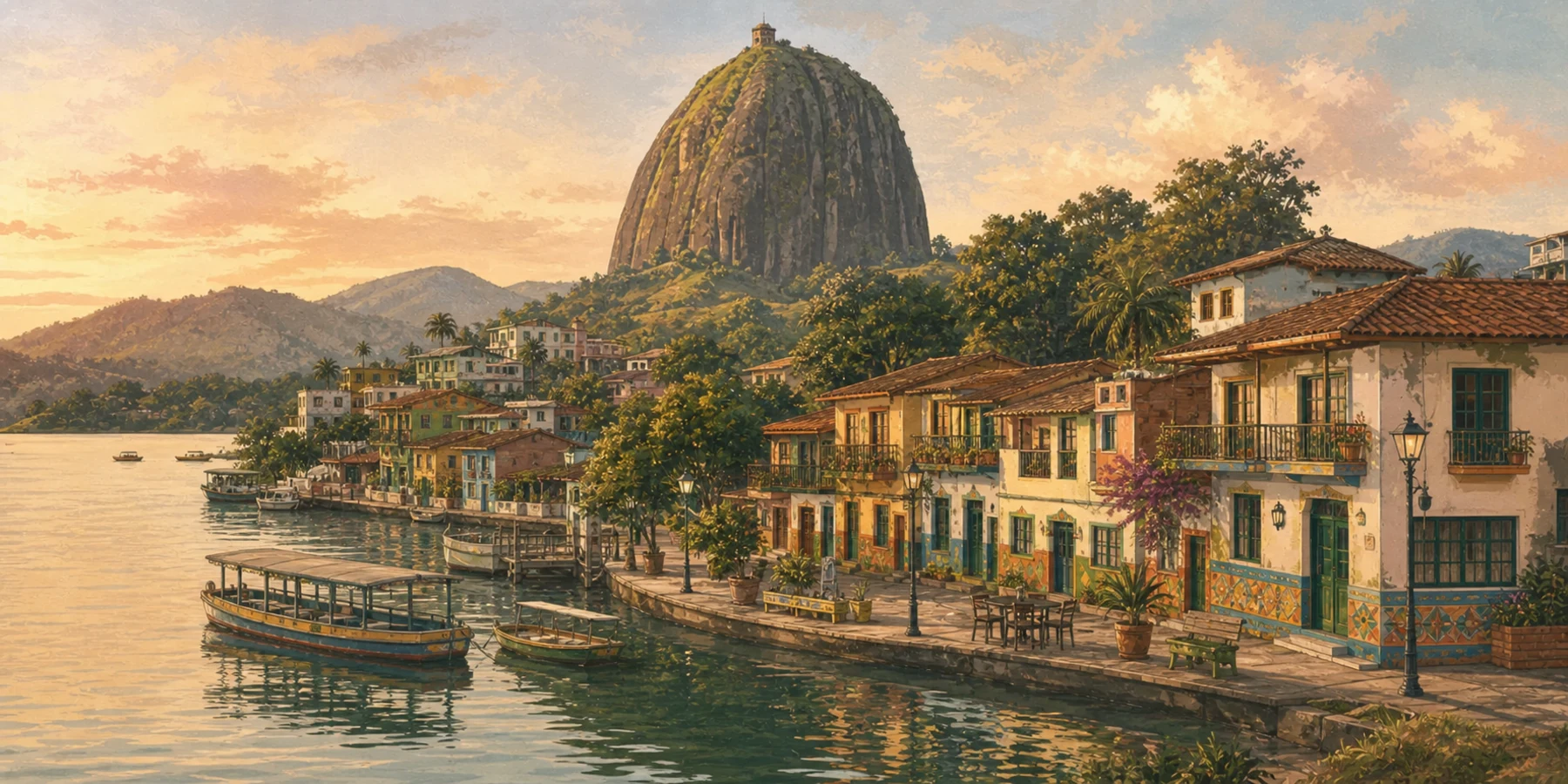
Guatapé is the kind of place that photographs well and, unusually, lives up to it once you arrive. This small lakeside town sits beside a sprawling reservoir, its streets lined with buildings whose lower walls are decorated in bright, three-dimensional panels known as zócalos. These painted friezes depict everything from farm animals to local trades, and they turn an ordinary walk into a slow-moving gallery. The town is compact and walkable, built around a waterfront and a scattering of plazas, and it has leaned fully into its role as one of Antioquia's most colourful destinations. That popularity is worth naming honestly: by mid-morning the central streets fill with day-trippers, and the town can feel more like a set than a place people live.
The reason to stay, rather than simply pass through, is what happens on either side of that daytime rush. Early mornings and late evenings belong to a much quieter Guatapé, when the light is soft on the water and the zócalos glow without a crowd in front of them. You travel out from the city, most likely from a base like Barrio Manila in El Poblado, and the shift from Medellín's density to this reservoir landscape is genuine and restful. Just set your expectations correctly. Guatapé is a holiday base, not a work base. Connectivity and services are more limited than in the city, so treat it as a place to unplug for a night or two rather than somewhere to run a working week.
Getting there
Guatapé lies roughly two hours east of Medellín by road, through green hills and past the vast reservoir that gives the region its shape. The most comfortable option is arranging trusted round-trip transport, whether a private driver or a pre-booked car, which lets you leave early, stop at the Piedra del Peñol on the way, and return on your own schedule. Public buses do run from Medellín's terminal and are inexpensive, but they are slower, less flexible, and less convenient if you are carrying luggage for an overnight stay. If you self-drive, the road is paved and reasonably good, though it winds in places, so favour daylight for the mountain sections and give yourself margin.
Because Guatapé is a genuine overnight destination rather than a quick hop, plan the logistics before you go. Confirm your return arrangement in advance rather than assuming you can flag something down late in the day, when options thin out. Carry cash: smaller guesthouses, boat operators, and informal vendors may not take cards, and mobile signal can be patchy enough that card machines are unreliable even where they exist. If you only have a single day and do not want to stay over, we cover that scenario separately in our Guatapé day-trip guide, which is the better fit for a tightly timed visit.
Things to see and do
The two anchors of any visit are the Piedra del Peñol and the reservoir itself. The Piedra is a monumental rock rising abruptly from the landscape, and a staircase of around seven hundred steps zigzags up its flank to a viewpoint at the top. The climb is genuinely demanding and rewards you with a panorama over the fingered, island-dotted embalse that is among the most striking views in Antioquia. This is precisely where staying overnight pays off: arrive early, before the tour buses, and you can climb in cooler air with the staircase relatively clear, then have the summit viewpoint to yourself rather than shuffling through a queue. Confirm opening hours locally, as they can shift, and take water for the ascent.
The reservoir invites more than looking. Boat tours leave from the waterfront and range from short spins to longer circuits that pass the various islands and inlets, and quieter self-powered options such as kayaking and paddleboarding are available for those who prefer the water without an engine. Confirm operators, timings, and availability on the day, since these depend on weather and season. Back in town, the pleasure is mostly in wandering. The Plazoleta de los Zócalos gathers some of the best of the painted panels in one place, the Calle del Recuerdo is a much-photographed street of colour, and the malecón along the waterfront is where the town relaxes in the evening once the crowds have gone.
Give yourself time simply to walk the side streets, where the zócalos are less curated and more everyday, tied to the families and businesses behind them. This is the version of Guatapé that feels least like a photo opportunity and most like a working town that happens to be beautiful. If you have booked an overnight, use the late afternoon for the reservoir or a leisurely lunch, save the town streets for the golden hour when the day-trippers are leaving, and reserve the Piedra climb for first thing the next morning. That sequence turns a rushed checklist into a properly paced two-day trip, and it is the single biggest argument for staying rather than day-tripping.
Where to eat and drink
Guatapé's eating is concentrated around the waterfront and the central plazas, and it skews towards casual, visitor-friendly places rather than a deep culinary scene. Expect a cluster of restaurants and cafés along the malecón serving Colombian standards, freshwater fish from the reservoir, grilled meats, and the usual arepas and set lunches, alongside coffee shops and juice bars that make good use of the town's photogenic corners. Prices near the water tend to reflect the tourist trade, so if you want something plainer and cheaper, walk a street or two back from the main drag where local eateries serve the everyday menú del día. As ever, confirm hours directly, especially midweek and in the low season, when some places keep shorter or irregular schedules.
For an overnight stay, plan your evening meal with the town's rhythm in mind. Many day-focused spots wind down not long after the crowds thin, so the quiet evening you came for can also mean fewer open kitchens than you might expect. Ask your guesthouse for a current recommendation, since openings and closures shift, and keep some cash aside for dinner and drinks. A relaxed evening here is more about a simple meal by the water and an early night than a late scene, which suits the pace of the place.
Where to stay
Accommodation in and around Guatapé falls into a few broad types. In the town itself you will find guesthouses and small hotels, many decorated in the same cheerful spirit as the zócalos, within walking distance of the waterfront and plazas. Out along the reservoir and towards the Piedra there are lakeside lodges, cabins, and finca-style stays with water views, which trade walkable convenience for quiet and scenery. Choosing between them is the main decision: staying in town keeps restaurants and the evening malecón on your doorstep, while a lakeside property gives you calm, views, and often a more restful night, at the cost of needing transport for meals and sights.
Whichever you choose, book ahead for weekends and Colombian holidays, when the town is busiest and rooms go quickly, and confirm what is actually included, since internet and other services are more limited here than in the city. Do not assume reliable wifi or round-the-clock reception at smaller places. If getting an early start on the Piedra matters to you, factor in how far your lodging sits from the rock, because a property near the base makes that dawn climb far easier than one in the town centre. This is holiday lodging by nature, so lean into comfort and setting rather than treating any of it as a place to work.
When to go, weather and what to pack
Guatapé sits at altitude in a green, hilly region, so the climate is mild and spring-like rather than hot, with warm days and cooler evenings year-round. Rain is possible in any season and the surrounding hills can cloud over quickly, which affects both the Piedra views and boat trips, so build in a little flexibility rather than pinning everything on one window. Weekdays and the shoulder seasons are noticeably calmer than weekends and Colombian public holidays, when the town can feel overwhelmed by visitors. If a quieter Guatapé is what you are after, a midweek overnight is the sweet spot.
Pack for a mix of sun, exercise, and cool nights. Bring comfortable shoes with grip for the Piedra staircase, sun protection and water for the exposed climb, and a light layer for the evening. A rain shell or small umbrella is sensible given the changeable weather, and if you plan to get on the water, quick-drying clothes are useful. Above all, carry enough cash for the trip, since card acceptance is inconsistent and signal can be too patchy to rely on for mobile payments. A power bank is a small comfort worth having when connectivity is thin.
Practical tips
Handle transport and money before anything else. Arrange trusted round-trip transport and confirm your return in advance, keep to daylight for the winding mountain sections of the drive, and carry cash for boats, meals, small vendors, and guesthouses that may not take cards. Treat mobile connectivity as unreliable: download any maps or booking confirmations you might need offline, and do not count on a stable signal for last-minute arrangements. These are ordinary travel habits rather than special precautions, but they matter more here than in the well-serviced city.
For the visit itself, front-load the popular sights into the quiet hours. Climb the Piedra early, walk the town streets around dawn or dusk, and use the middle of the day for a boat trip, a long lunch, or simply resting by the water while the crowds churn through the centre. Confirm hours and availability locally for the Piedra, boat operators, and restaurants, all of which vary by day and season. And keep the framing right in your own mind: Guatapé is a place to slow down and disconnect for a night or two, not a place to keep working, so plan your commitments around that before you leave the city.
Day trip or overnight: the verdict
If your only goal is to see the Piedra del Peñol and photograph the zócalos, Guatapé works perfectly well as a day trip, and our separate day-trip guide is built for exactly that. You can climb the rock, wander the painted streets, take a boat out, and be back in the city by evening. For a tightly timed itinerary or a single free day, that is the sensible choice, and there is no shame in treating Guatapé as a highlights reel.
But the town rewards patience, and an overnight is the better experience if you can spare it. Staying lets you climb the Piedra before the buses arrive, enjoy the malecón and the quiet streets after the day-trippers leave, and feel the town settle into its calmer, more genuine evening self. The trade-off is real: services and connectivity are more limited, and you will need to plan meals and transport more deliberately. Weighed against a peaceful morning at the top of the rock with the reservoir spread out below and almost no one else around, that is a trade most travellers will happily make.
Frequently asked questions
How long does it take to get to Guatapé from Medellín?
Roughly two hours by road, depending on traffic and your departure point. Arranging trusted round-trip transport is the most comfortable option and lets you stop at the Piedra del Peñol on the way and return on your own schedule.
Is one day enough, or should I stay overnight?
A day works for seeing the Piedra and the painted streets, and we cover that in our separate Guatapé day-trip guide. An overnight is better if you want to climb early before the crowds and enjoy the quiet town in the evening.
How many steps is the Piedra del Peñol climb?
Around seven hundred steps up a zigzagging staircase to the summit viewpoint. It is demanding but rewards you with sweeping views over the reservoir. Take water, wear shoes with grip, and confirm opening hours locally.
Can I work remotely from Guatapé?
It is best treated as a holiday base rather than a work base. Internet and services are more limited than in the city, so plan to disconnect for a night or two rather than run a working week from here. Keep the city as your work base.
Do I need cash, or will cards be accepted?
Carry cash. Smaller guesthouses, boat operators, and informal vendors may not take cards, and patchy mobile signal can make card machines unreliable even where they exist.
What is there to do on the reservoir?
Boat tours run from the waterfront, ranging from short spins to longer circuits past the islands, and quieter options like kayaking and paddleboarding are available. Confirm operators, timings, and availability on the day, as these depend on weather and season.