Planning
Punta del Este in Winter: What to Expect in the Off-Season
What stays open and what closes, the real winter weather, prices and long stays, whale watching and the pleasure of empty beaches from June to August.
In this guide
The short version
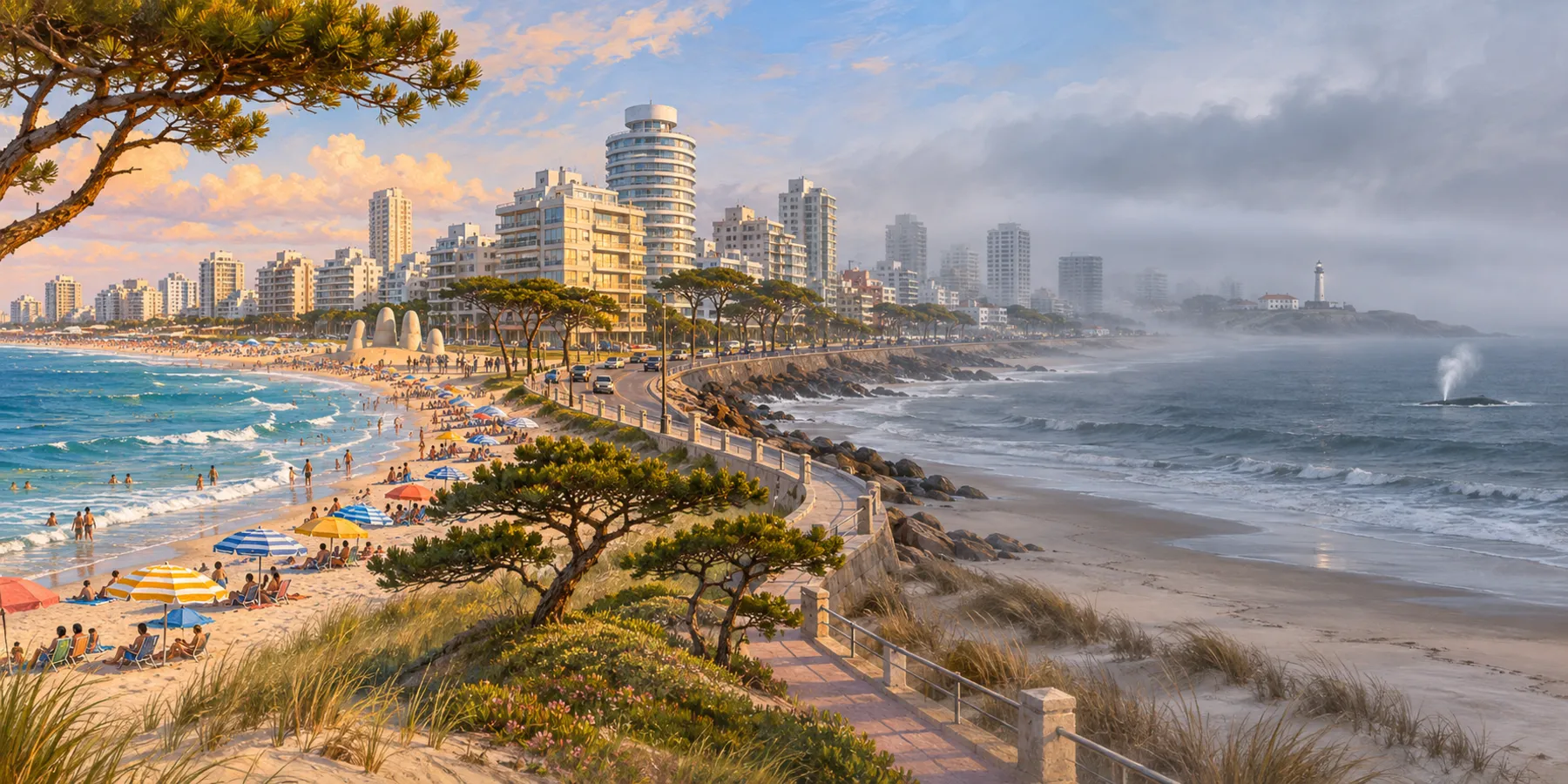
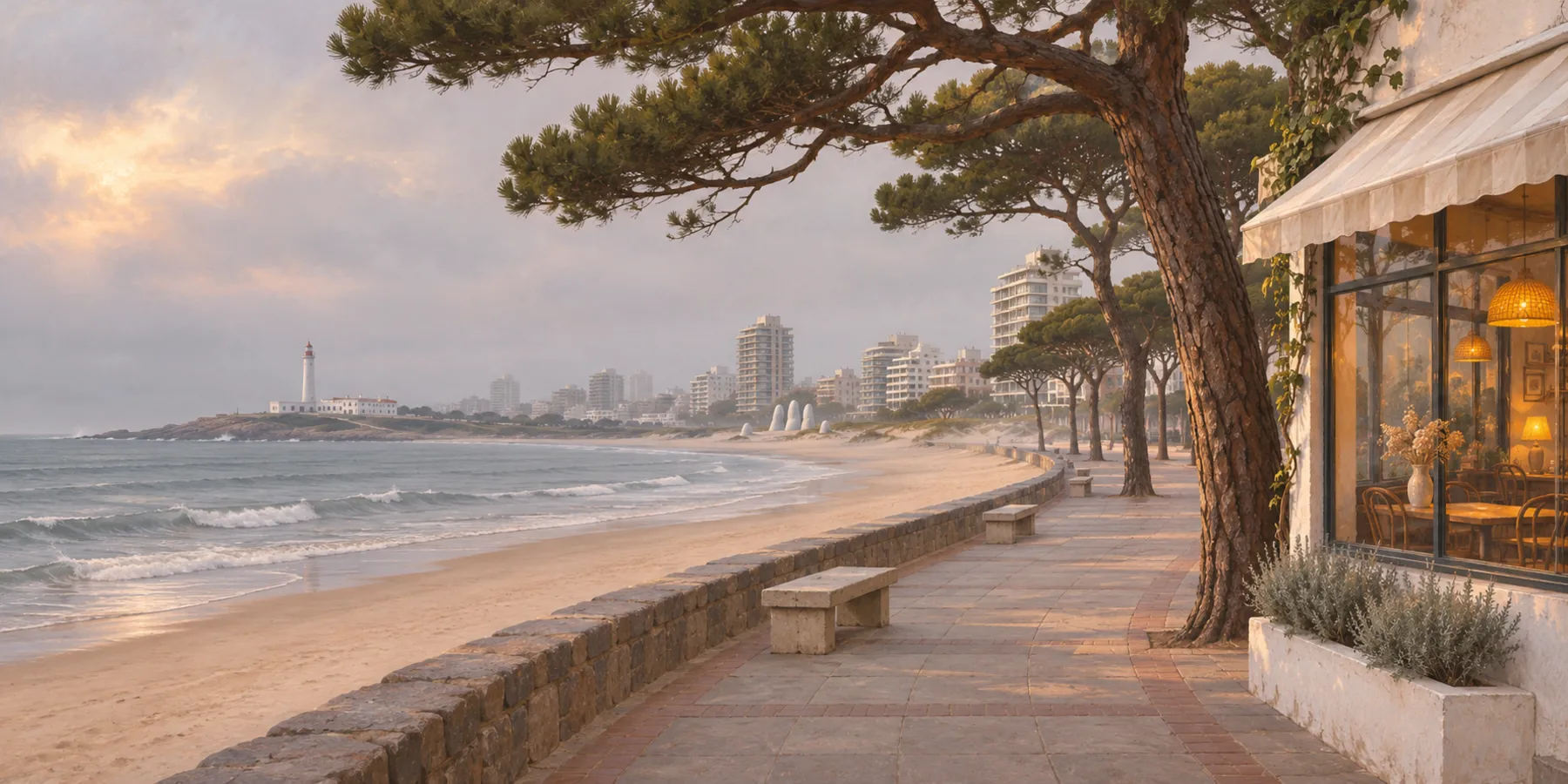
Winter in Punta del Este runs from June to August, and it is a different place from the summer resort. Most visitors leave, many seasonal businesses close, and the town settles into the rhythm of the people who live here all year. Beaches are empty, roads are quiet and the light over the bay in the late afternoon is some of the best of the year.
It is not a beach holiday. It suits people who want space and calm: remote workers, writers, couples, families with young children outside school holidays, and anyone hoping to see whales from the shore. If you need nightlife, open beach clubs and warm water, come in summer instead; our guide to the best time to visit sets out the alternatives.
A few practical points first: bring warm, windproof layers and a waterproof jacket, check opening hours before setting out, and expect early sunsets, before 18:00 around the June solstice.
What the weather is really like
Monthly mean temperatures at the Punta del Este weather station were about 10 to 13 °C in July in 2023 and 2024, according to INUMET data published by Uruguay's national statistics institute (INE). June and August are similar. Those are averages: clear, still days can be bright and pleasant around midday, while a southerly wind off the sea can make an ordinary afternoon feel raw.
Rain tends to arrive in spells of a day or two, often with wind, rather than as a constant wet season. Fog can settle over the coast on some mornings. Snow is not part of the picture.
Indoor comfort matters more than the forecast. Before booking any winter stay, ask the host how the apartment is heated and whether it suits the time of year you are visiting.
What stays open and what closes
Punta del Este has a permanent population, and the town next door, Maldonado, is a working departmental capital with banks, government offices, hardware stores and markets. Everyday life carries on all year.
What usually stays open:
- Punta Shopping, the main shopping centre, with supermarkets, pharmacies, shops and food outlets.
- Supermarkets, pharmacies, bakeries and butchers across Punta del Este and Maldonado.
- Central cafés and a selection of restaurants on the peninsula, around the port and in residential areas, often with reduced days or hours.
- Public services, banks and exchange houses on normal working days.
What usually closes or cuts back:
- Beach clubs and beach bars (paradores) on the Brava and the Mansa.
- Many seasonal restaurants and shops, especially in La Barra and José Ignacio.
- Some hotels and tour services, which close for maintenance or open only at weekends.
Opening patterns change from year to year and between weekdays and weekends. Check a venue's current listing or call before making a special trip, and treat a Sunday evening in July as a night to cook at home.
Prices, availability and long stays
Demand drops sharply after Easter week, and the market becomes much easier for guests. Availability is wide, minimum stays are shorter, and owners are more open to weekly or monthly arrangements. We do not quote prices here, because they depend on the apartment, the dates and the length of stay, but winter is consistently the least expensive time of year to stay on the coast.
Long stays work well in winter for the same reasons the season is quiet. There is little to pull you away from a routine: work in the morning, walk the rambla at lunch, cook in the evening. Uruguay's fibre network covers most of the population, which makes working from an apartment practical; our remote work guide covers internet, time zones and the digital nomad permit.
If a long winter stay appeals, our ocean-view apartment on Playa Mansa has a full kitchen with an island, a desk in the king suite and ocean views from the living room and balcony, which are at their most dramatic when a winter front comes in over the bay.
Whale watching from the shore
Winter is whale season. Southern right whales travel along the coasts of Maldonado and Rocha between roughly July and October, according to Uruguay's Ministry of Tourism, which lists Playa Mansa between paradas 23 and 40 among the viewing points, together with Punta del Chileno, Punta Negra, Cerro San Antonio near Piriápolis and the José Ignacio lighthouse.
Sightings are never guaranteed, but the odds improve on calm, clear mornings with little swell. Bring binoculars, a warm hat and a flask of something hot, and give it time. If you join a boat trip, use a local operator who follows Uruguay's rules for marine mammals and keeps the distance the Ministry recommends, about 300 metres.
Quiet beaches and winter walks
The Mansa side is the obvious place to start. Its rambla runs along the bay towards the peninsula, and in winter you can walk it for an hour and meet only dog walkers and runners. Our Playa Mansa guide covers the beach in detail.
Other good winter outings:
- The port and the tip of the peninsula, where sea lions often wait near the fishing boats for scraps.
- Punta Ballena and Casapueblo at sunset, covered in our Punta Ballena guide.
- The Arboretum Lussich, a large wooded park on the hills behind Punta Ballena, pleasant on a still day.
- José Ignacio, which is almost empty in winter; see our José Ignacio day trip guide and check which places are open.
For more ideas within an hour's drive, read our guide to day trips and family travel.
Getting around and practical tips
A car makes winter much easier, since some bus routes run less often outside the season and distances between open places grow. Taxis and app-based rides are available, but allow more waiting time in the evenings.
July brings winter school holidays in Uruguay and in parts of Argentina, which add a short burst of visitors and some reopened restaurants. Otherwise, plan around a quiet town: do a larger supermarket shop when you arrive, keep a list of places confirmed as open, and enjoy having the coast largely to yourself.
Frequently asked questions
Is Punta del Este worth visiting in winter?
Yes, if you want calm rather than a beach holiday. Beaches are empty, stays are more flexible and whale season starts in July. Many seasonal restaurants and beach clubs close, so it suits long stays, remote work and quiet breaks.
What is open in Punta del Este in winter?
Punta Shopping, supermarkets, pharmacies, bakeries, central cafés and a selection of restaurants stay open, often with reduced hours. Beach clubs and many seasonal places in La Barra and José Ignacio close. Check hours before going out.
How cold does it get?
INUMET data published by INE show July monthly mean temperatures of about 10 to 13 °C at the Punta del Este station in 2023 and 2024. Wind off the sea makes it feel colder, and rain comes in short spells.
Can I see whales in winter?
Southern right whales pass the coast between roughly July and October. Uruguay's Ministry of Tourism lists Playa Mansa between paradas 23 and 40 among the viewing points. Calm, clear mornings give the best chance.
Is winter cheaper?
Winter is generally the least expensive time of year to stay, with wider availability and more flexibility on weekly or monthly stays. Prices depend on the apartment and dates, so ask for a quote for your exact stay.
Sources and review notes
- INE Anuario Estadístico 2025: monthly mean temperatures by station (INUMET data) , checked 2026-11-13
- Ministerio de Turismo: whale-watching season launch and viewing points , checked 2026-11-13
- Presidencia: Antel fibre coverage reaches 96% of the population , checked 2026-11-13
Next editorial review: 13 May 2027