Neighborhoods
Playa Mansa vs Playa Brava: Which Punta del Este Beach Suits You?
Calm bay or open Atlantic: how the two beaches differ in water, wind, surf, safety, sunsets and daily life, and who should choose which.
In this guide
The quick decision
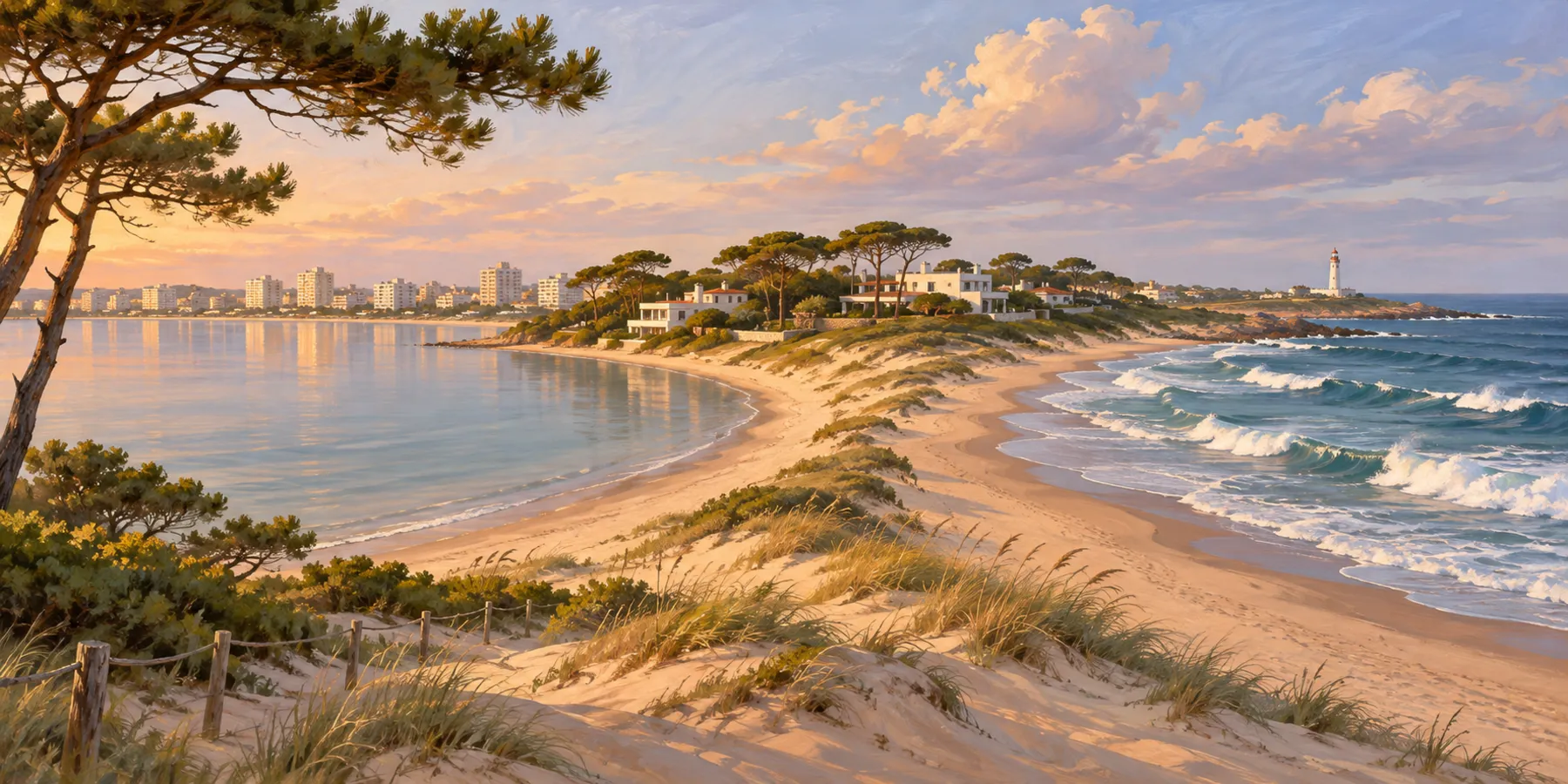
Punta del Este sits on a narrow peninsula with a beach on each side. Playa Mansa runs along the sheltered Bay of Maldonado to the west; Playa Brava faces the open Atlantic to the east. They are a few blocks apart at the Península and a few minutes apart by car farther out, so you can use both. Where you sleep still shapes your days.
Choose the Mansa for calmer water, sunsets and a family routine. Choose the Brava for surf, open-ocean views and sunrises. If you are unsure, stay on the Mansa and drive or walk across to the Brava when the conditions are good.
Water and waves
The Mansa's water is usually calm, with small waves and a gentle slope, because Isla Gorriti and the shape of the bay block most of the Atlantic swell. On many summer days children can paddle at the edge and adults can swim along the beach.
The Brava takes the swell directly. Waves are bigger, the bottom drops faster in places and the sand is coarser. Currents form between the sandbars, and on rough days the water can be dangerous even for confident swimmers. Lifeguards in Maldonado say they never raise the green flag on Playa Brava, because caution is always needed there.
Wind
Wind is the great equaliser in Punta del Este. A southerly or southwesterly can put a chop on the Mansa and send sand across the beach, while an offshore day can leave the Brava glassy and inviting. Some Mansa paradas are breezier than others, and the Brava is generally windier and cooler than the bay side.
Locals choose their beach each morning according to the wind. Staying near the neck of the Península or in the middle paradas of either beach makes it easy to do the same.
Surf and water sports
Surfers go to the Brava. The swell arrives year-round, surf schools operate in season around the low paradas (La Olla, near Parada 3, is the best known), and the breaks continue east toward La Barra and Manantiales. The Mansa occasionally has small waves for beginners, but it is better known for sailing, kayaks, paddle boards and jet skis, with boat ramps and rental points along the middle paradas.
Families and safety
For young children, the Mansa is the easier beach most days. The water is shallower near the shore, the waves are smaller, and in season there are lifeguard posts, beach bars and shade at many paradas.
On either beach, read the flags: green for calm water, yellow for caution, red for no swimming, and a red flag with a green cross for a health-related ban. A small red pennant on the shore marks a dangerous current. If you are caught in one, do not swim against it: swim parallel to the shore or float and raise an arm for help. Keep children within arm's reach on the Brava, and keep well clear of surfers, whose fins cause many injuries.
Sunsets versus sunrises
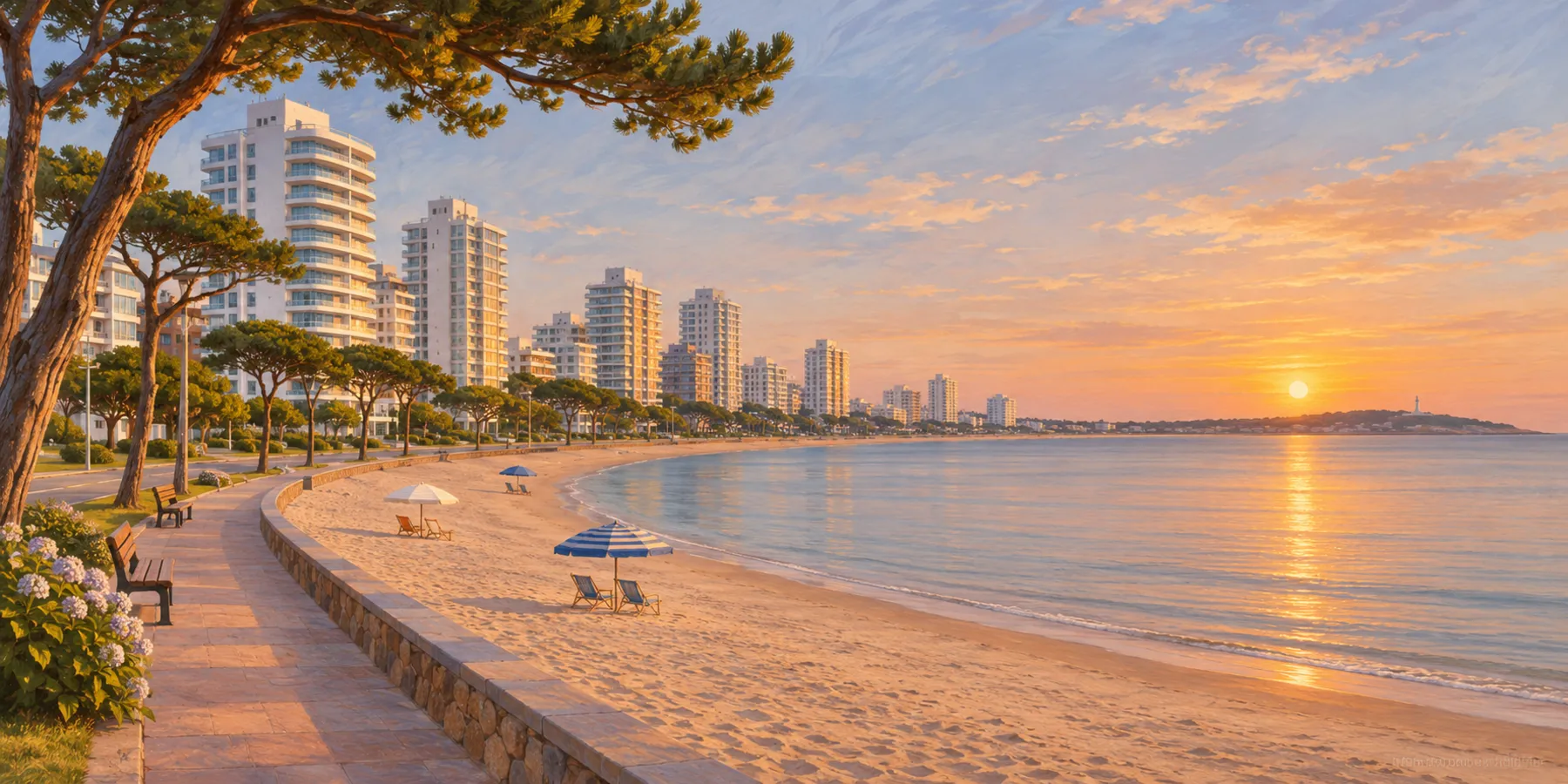
The Mansa faces west, so the sun sets over the bay toward Punta Ballena. It is the evening beach: families stay on the sand for the last hour of light, and the rambla fills.
The Brava faces the open ocean to the east and southeast, so it catches the sunrise. Early mornings are quiet, with surfers in the water and walkers on the sand. In the evening the Brava still has good light, with the Península's towers and Los Dedos glowing, but the sun itself goes down behind the town.
Los Dedos
Los Dedos (also called La Mano), the giant hand emerging from the sand, is at Parada 1 of the Brava, a few blocks from Gorlero. Chilean artist Mario Irarrázabal made it in 1982 during an open-air sculpture meeting, and it is now the most photographed spot in Punta del Este. Whichever beach you choose, it is an easy stop from the Península. Our Playa Brava and Los Dedos guide tells the story and explains how to visit.
Daily life on each side
Beyond the water, the two beaches feel different to live on. The Mansa side has the denser strip of apartment buildings along the rambla, with Avenida Roosevelt and its supermarkets, pharmacies and shopping centre a few blocks inland. Most daily errands are a short walk or drive, and the rambla is busy with walkers and cyclists from morning to night.
The Brava side is more open and more spread out. Beyond the busy low paradas, homes are larger and further apart, services thin out, and the beach can feel almost empty on a weekday. That is its appeal for some visitors and its drawback for others, especially families without a car.
Who should pick which
Pick the Mansa if you travel with young children, swim more than you surf, want sunsets from the sand, or want supermarkets, pharmacies and the Península close by for a stay of several days. The middle paradas, roughly 10 to 20, are the sweet spot. Our ocean-view apartment at Parada 18 of the Mansa sleeps six, a block from the sand.
Pick the Brava if you surf, love wide ocean views and early mornings, or want a beach that feels wilder once you leave the busy stretches. Expect more wind, more care in the water and fewer services on foot as the paradas climb toward La Barra.
Use both if you have a car or stay near the Península. Many visitors swim on the Mansa, walk to Los Dedos, and drive to the Brava when the swell is up. Read the Playa Mansa guide for the bay side in detail.
Frequently asked questions
Which beach is calmer, Playa Mansa or Playa Brava?
Playa Mansa. It faces the sheltered Bay of Maldonado, while Playa Brava takes the open Atlantic swell.
Can you swim at Playa Brava?
Yes, when the flags allow it and near a lifeguard post. Lifeguards never fly the green flag there, because currents and waves always call for caution.
Where is the hand sculpture in Punta del Este?
Los Dedos is at Parada 1 of Playa Brava, a few blocks from Avenida Gorlero on the Península.
Which beach has the sunset?
Playa Mansa faces west, so the sun sets over the bay toward Punta Ballena. Playa Brava is the sunrise beach.
Are the two beaches far apart?
No. Near the Península they are a few blocks apart, and from the middle paradas the other beach is a short drive.
Sources and review notes
- Guardavidas responden dudas para un baño seguro (El Observador) , checked 2026-11-13
- Playa Brava, Los Dedos (InfoCasas) , checked 2026-11-13
- Paradas Playa Mansa (InfoCasas) , checked 2026-11-13
- La Mano de Punta del Este (Wikipedia) , checked 2026-11-13
Next editorial review: 13 May 2027