Food
Uruguayan Food in Punta del Este: What to Eat and How to Eat It
Parrilla and asado, the chivito, empanadas and pizza with fainá, coastal seafood, mate and dulce de leche, and how to eat well near Playa Mansa.
In this guide
What to expect
Uruguayan food is built on very good beef, Italian and Spanish home cooking, and a few national habits that visitors quickly notice: the parrilla, the chivito, mate carried everywhere and dulce de leche in almost every dessert. On the coast, fish and seafood join the list. It is generous, straightforward food rather than elaborate cooking, and the best meals are often the simplest.
Timing matters. Lunch usually runs from about 13:00, and dinner starts late, often after 21:00 in summer. Portions are large; sharing a main course or ordering one parrilla platter for two is normal. Many seasonal restaurants open only from December to Easter week, so check current hours, particularly outside summer.
The parrilla and the asado
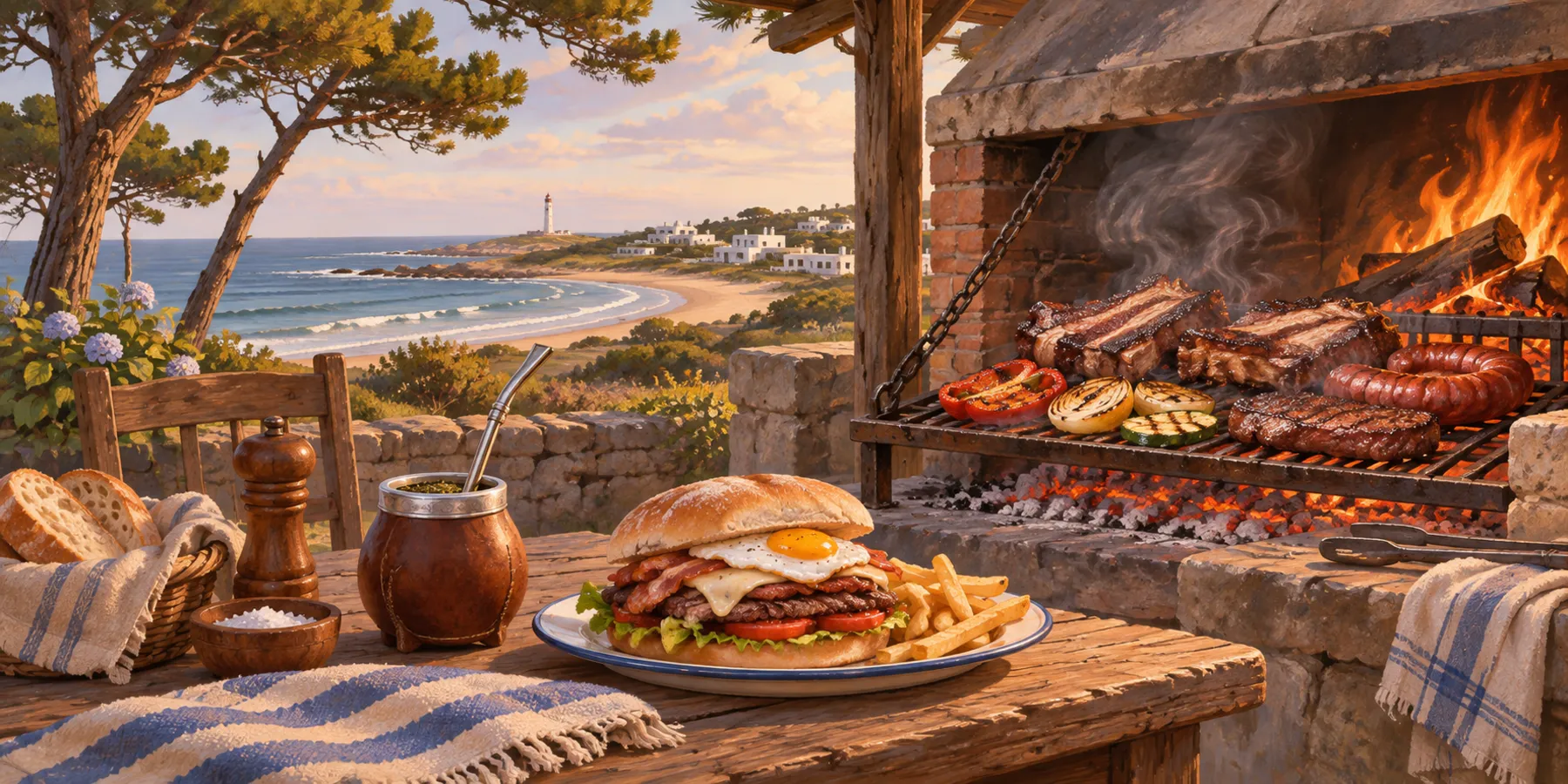
Uruguay is one of the world's largest consumers of beef per person, according to the National Meat Institute (INAC), and the parrilla (grill) is the centre of eating out. A parrillada restaurant cooks over wood embers, with the grill and fire usually in view.
Useful words on a parrilla menu:
- Asado de tira: beef short ribs cut across the bone, the classic cut.
- Vacío: flank, juicy and full of flavour.
- Entraña: skirt steak, thin and quick to cook.
- Bife de chorizo and lomo: sirloin and tenderloin.
- Chorizo, morcilla and chinchulines: sausage, blood sausage and grilled chitterlings, often served first.
- Provoleta: a disc of provolone cheese grilled until crisp at the edges.
Order meat by doneness (jugoso for rare, a punto for medium, cocido for well done) and keep sides simple: a mixed salad, fries or grilled vegetables. A chimichurri or salsa criolla is often on the table.
An asado is also a social event at home: a long weekend lunch, with the grill lit early and meat arriving in rounds. If you are staying in an apartment with a grill, a local butcher (carnicería) will advise you on cuts and quantities; tell them how many people you are feeding.
The chivito and everyday food
The chivito is Uruguay's best-known sandwich: thin beef steak in a soft bun with ham, cheese, tomato, lettuce, mayonnaise and often a fried egg, bacon or olives. The usual story credits its invention to a restaurant in Punta del Este in the 1940s, when a customer asked for kid goat (chivito) and the cook improvised with beef. The chivito al plato serves the same ingredients on a plate with fries and salad, and it is a full meal.
Other everyday dishes you will see on most menus:
- Milanesa: breaded beef or chicken, sometimes topped with ham, tomato sauce and cheese (a la napolitana).
- Pasta: fresh pasta such as ñoquis, ravioles and sorrentinos, a legacy of Italian immigration. Many families still eat ñoquis on the 29th of each month.
- Torta frita: fried dough, popular on rainy days.
Empanadas, pizza and fainá
Empanadas are pastries filled with minced beef, ham and cheese, chicken, or seasonal fillings, baked or fried. They work as a starter, a beach lunch or a light dinner, and bakeries sell them by the dozen.
Uruguayan pizzerías are worth a visit. Pizza is often sold by the slice or by the metre, and it comes with fainá, a thin chickpea flatbread eaten alongside or on top of the pizza. Pizza a caballo means a slice with fainá placed on top.
Fish and seafood on the coast
Punta del Este has a fishing port at the tip of the peninsula, and the coast is the best place in Uruguay for seafood. Look for corvina, brótola and other local white fish, grilled or fried; rabas (fried squid rings); mejillones (mussels), often served in a sauce; and seafood paella or cazuela (stew) in restaurants that specialise in fish.
As a rule, simpler preparations show off the freshness. Ask what came in that day, and remember that availability depends on the weather at sea. At the port you can often see fishing boats unload and sea lions waiting nearby.
Mate and dulce de leche
Mate is not a restaurant drink but part of daily life. Uruguayans carry a gourd, a metal straw (bombilla) and a thermos of hot water under one arm, and drink it at work, on the bus and on the beach. If someone offers you a mate, drink the whole gourd and hand it back to the person serving; say gracias only when you have had enough, because that means you do not want another round. Yerba mate and gourds are sold in every supermarket if you want to try it yourself.
Dulce de leche, slowly cooked milk and sugar, appears in alfajores (filled biscuits), crêpes (panqueques), ice cream and cakes. Try a chajá, a sponge cake with meringue, cream, peaches and dulce de leche, at a bakery. Uruguayan ice cream shops are serious about dulce de leche flavours, and a walk for ice cream along the rambla is a summer ritual.
How to eat near Playa Mansa
The Mansa side of Punta del Este is residential, so eating well near the beach comes down to three habits:
- Shop locally. Supermarkets, bakeries and butchers within easy reach cover breakfast, picnics and a home-cooked asado.
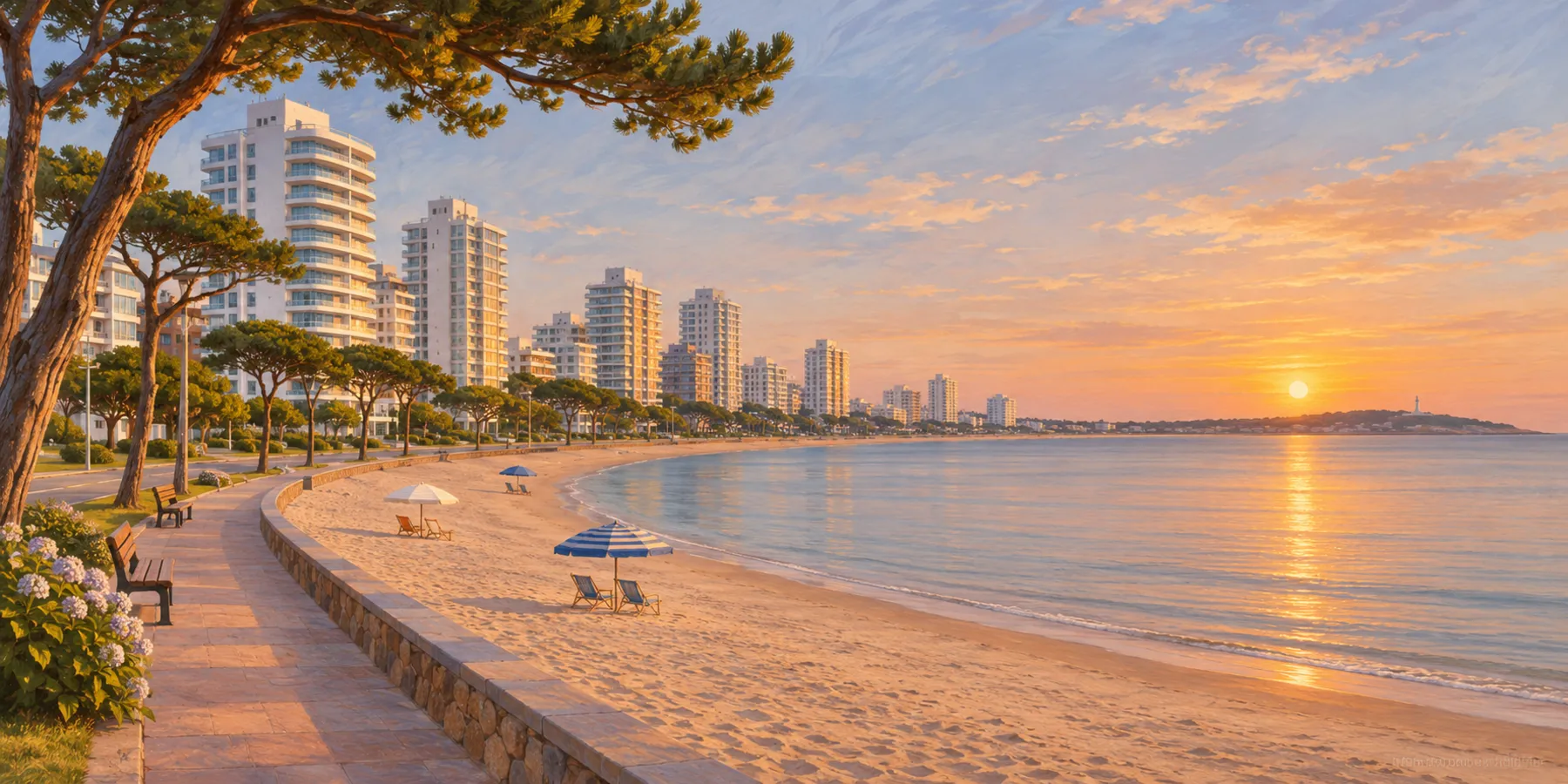
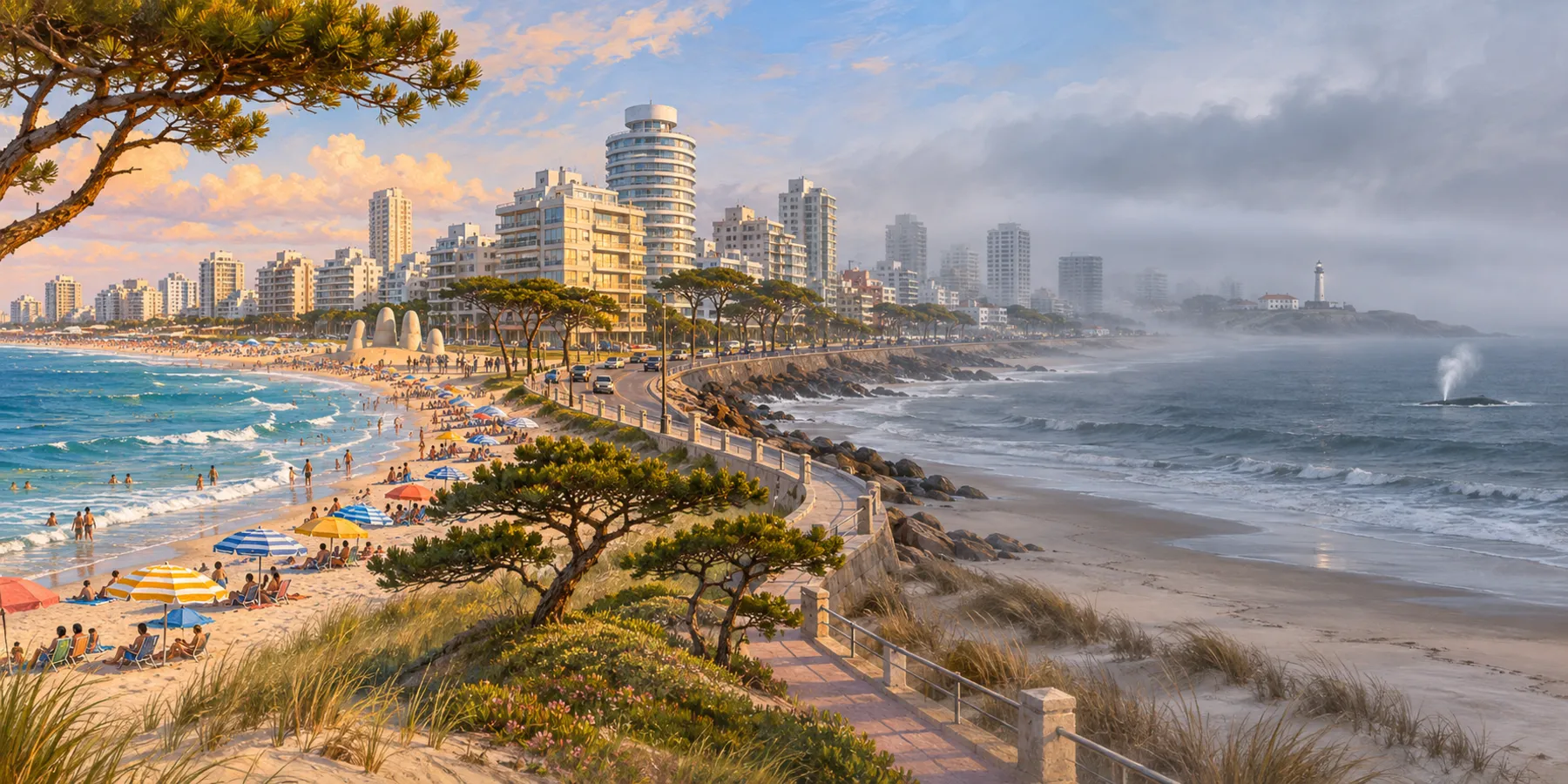
- Use the beach and the rambla. In summer, beach bars (paradores) along the Mansa serve lunch, drinks and sunset snacks. Outside the season many close, so check before you walk.
- Go to the peninsula or Punta Shopping for choice. The peninsula and the port have the densest concentration of restaurants, and Punta Shopping has year-round food options. Reserve dinner in January and February.
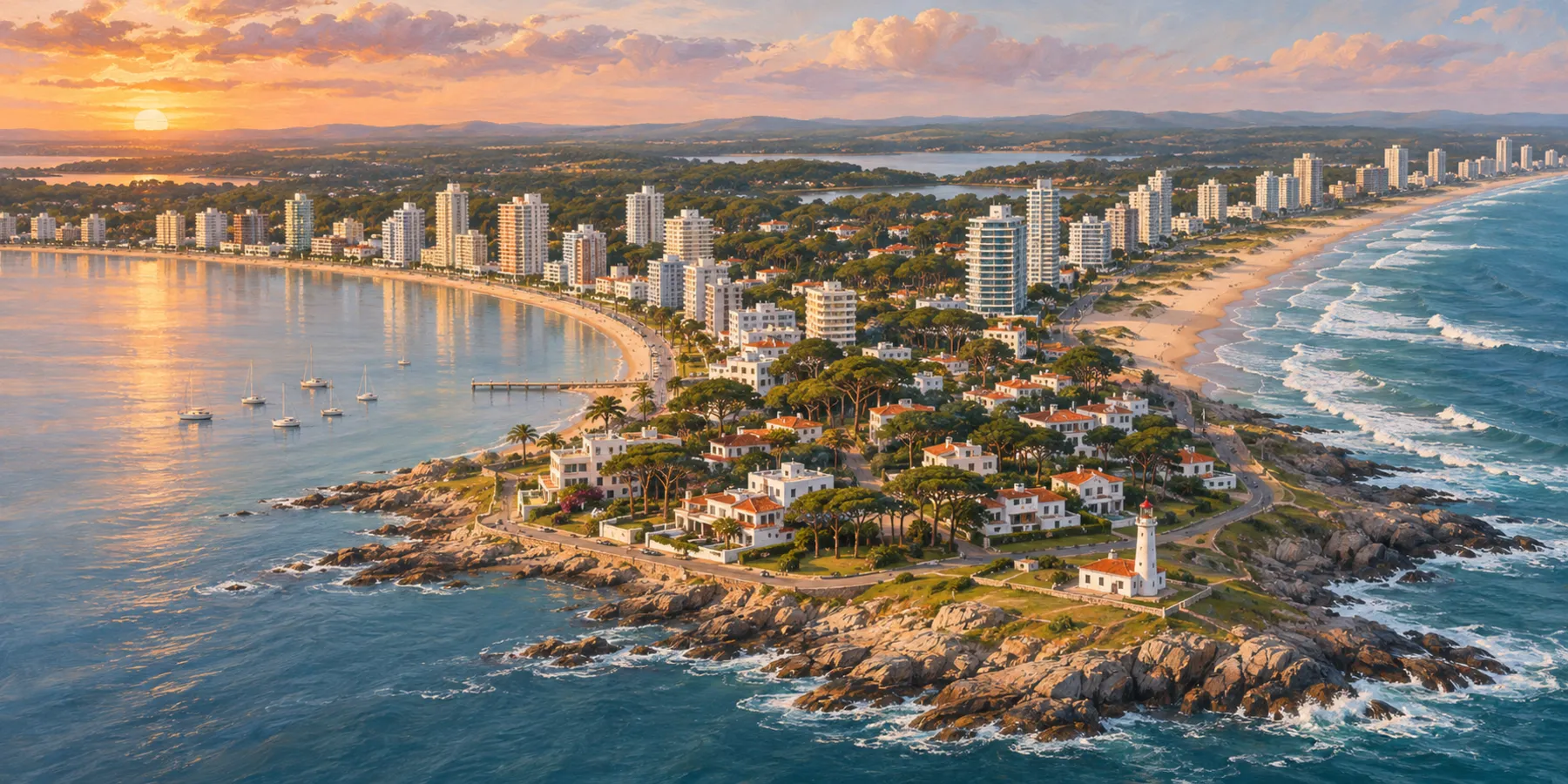
Staying in an apartment changes how you eat. At our apartment on Playa Mansa there is a full kitchen with an island and a dishwasher, and a BBQ grill on the balcony, so an asado with ocean views is an evening rather than an outing. For prices, tipping and the IVA benefits on restaurant bills for foreign visitors, see our guide to money in Uruguay. For the beach itself, read our Playa Mansa guide.
Frequently asked questions
What is the most typical food in Uruguay?
Grilled beef from the parrilla and the chivito sandwich are the best known. Empanadas, milanesa, pizza with fainá and desserts with dulce de leche are everyday favourites, and seafood is common on the coast.
What is a chivito?
A sandwich of thin beef steak with ham, cheese, tomato, lettuce and mayonnaise, often with a fried egg or bacon. The usual story credits its invention to a Punta del Este restaurant in the 1940s.
What time do people eat dinner in Punta del Este?
Late. Lunch usually starts around 13:00, and dinner often begins after 21:00 in summer. Reserve in January and February, when popular restaurants fill.
How do I order meat at a parrilla?
Ask for jugoso (rare), a punto (medium) or cocido (well done). Classic cuts are asado de tira, vacío and entraña, and a provoleta or chorizo makes a good start.
What are the rules for sharing mate?
Drink the whole gourd and hand it back to the person serving. Say gracias only when you have had enough, because it signals that you do not want another round.
Sources and review notes
- INAC: Uruguayan consumers and per capita meat consumption , checked 2026-11-13
- Chivito (sandwich): history and the Punta del Este origin story , checked 2026-11-13
- DGI: total IVA reduction on food services for non-residents, 2026-27 season , checked 2026-11-13
Next editorial review: 13 May 2027